
Growing More Than Gardens: How Seed Libraries Are Taking Root in McDonald County
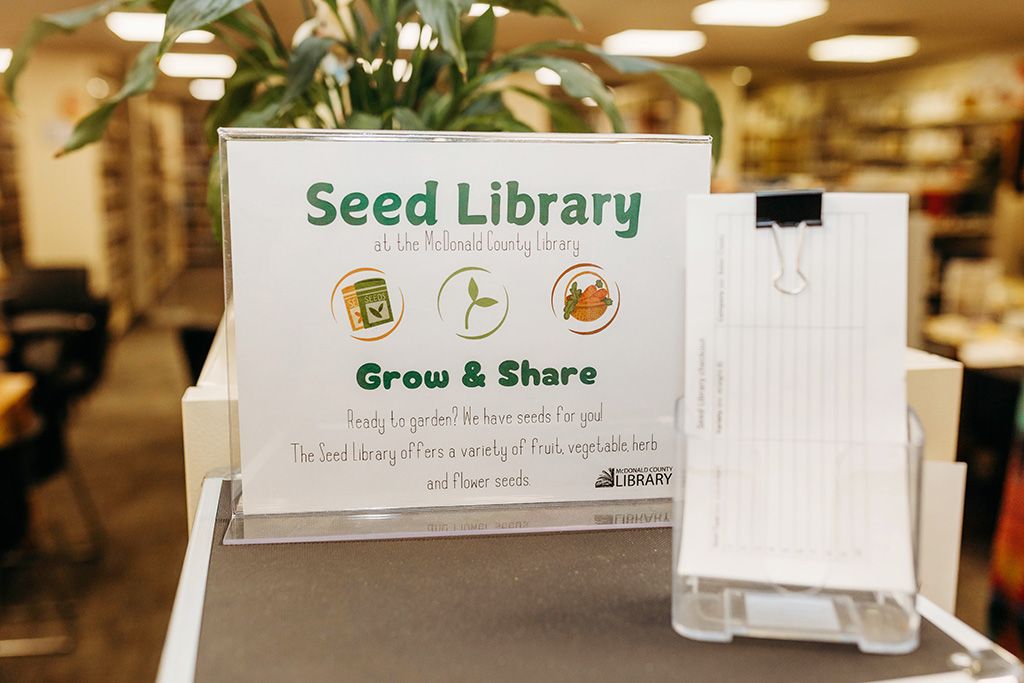
In a quiet corner of the library, tucked between bookshelves and bulletin boards, something small is making a big impact.
It doesn’t look like much at first - a collection of seed packets, neatly organized and free for the taking. But behind those packets is a growing effort to reshape how communities think about food, access and self-sufficiency.
Across McDonald County, seed libraries in Pineville and Southwest City are doing just that. Supported by the University of Missouri Extension, these small but powerful resources are helping residents grow their own food, sometimes for the first time, while connecting them to a broader network of education and support.
And while the concept may be new to some, its impact is already being felt.
A Simple Idea with Lasting Impact
At its core, a seed library works much like a traditional library, but instead of checking out books, visitors take home seeds.
“Seed libraries are a public library that community members can ‘check out seeds,’” says Eden Stewart, nutrition and health specialist with the University of Missouri Extension. “Now people don’t have to bring anything back, but if they save seeds, we will gladly give them out to other community members.”
That simple exchange creates something larger than a one-time interaction. It builds a cycle - one where community members not only grow their own food, but eventually contribute back, helping others do the same.
It’s a model built on accessibility and sustainability, and it removes many of the barriers that often stand between people and fresh food.

Planting the Seeds of the Program
The expansion of seed libraries across Southwest Missouri didn’t happen overnight. It began with a single question.
Stewart recalls being contacted by Crowder College in Neosho, Missouri, about starting a seed library, which sparked a larger idea about how Extension services could support communities beyond traditional programming.
“I started thinking about ways to support seed libraries and gardening resources for the public,” she says. “The Newton County Extension office started contacting local organizations and businesses to see how we can provide gardening resources for the community.”
From there, the concept grew, spreading into Newton County, McDonald County and beyond. Today, seed libraries can be found in multiple locations, including the Newton County Extension office, Crowder College’s Neosho campus library, all branches of the Barry-Lawrence Public Library system and even Missouri Southern State University.
But in McDonald County, the impact feels especially personal.
Growing in McDonald County
In Pineville and Southwest City, seed libraries have quickly become a tool not just for gardening, but for connection.
Community members are using the seeds in a variety of ways, from small backyard plots to larger shared spaces.
“Most people are utilizing the community gardens for home gardening,” Stewart says. “However, I know some have picked up seeds for larger gardens located at places of worship. Also, educators have used seeds in lessons for the classroom.”
That variety speaks to the flexibility of the program. It’s not limited to one type of user or one type of space. Whether it’s a family planting their first tomato plant, a church maintaining a shared garden or a teacher introducing students to food systems, the seed libraries adapt to the needs of the community.
And in doing so, they’re helping create something deeper than just a harvest.

Addressing Food Access at the Root
For many rural communities, access to fresh, affordable food can be a challenge. Limited transportation, cost barriers and distance from grocery stores all play a role in what’s often described as a “food desert.”
Seed libraries offer a practical, local solution.
“Seed libraries provide a vital resource for communities that are considered food deserts because it removes the barriers of fresh food,” Stewart explains. “People also get peak ripeness of their produce because they pick the food when it is ripe rather than unripe due to transportation of the food to the store.”
In other words, the benefits go beyond cost. Homegrown produce is not only more accessible, it’s often fresher, more flavorful and more nutritious.
For families trying to stretch their budgets or improve their diets, that can make a meaningful difference.
More Than Just Seeds
While the seed packets themselves are the most visible part of the program, they’re only the beginning.
The University of Missouri Extension has built a support system around the seed libraries, ensuring participants have access to the tools and knowledge needed to succeed.
A strong garden starts with strong soil, and that’s where one of the Extension’s key services comes in.
“We offer soil testing for a fee that will help gardens ensure they have well-balanced soil for the intended plants’ needs,” Stewart says. “So many of the problems we see later in the planting season are nutritional needs of the plants.”
Beyond soil testing, local Extension offices connect residents with master gardeners who provide workshops, answer questions and offer hands-on guidance throughout the growing season.
And when unexpected challenges arise—whether it’s pests, disease or something harder to identify—help is just a phone call away.
“If something is eating your plants or something odd is happening to your garden, give the local Extension office a call so we can connect you to the specialist who could help,” Stewart says.
That combination of resources transforms the seed libraries from a simple giveaway into a comprehensive support system.
Lowering the Barrier to Entry
For those who have never gardened before, the idea of growing food can feel intimidating. But the seed libraries are designed to be approachable for everyone, regardless of experience level.
“Anyone can grab seeds at the seed library no matter the level of experience,” Stewart says. “If you need a little help deciding what to tackle as your first plant, contact the local Extension office and we could have a master gardener provide you with some advice.”
To make things even easier, the Extension provides Missouri-specific planting calendars, offering guidance on what to plant and when, along with recommendations for common vegetable varieties.
It’s a step-by-step entry point into gardening - one that removes guesswork and builds confidence along the way.
A Regional Effort with Local Roots
Although the focus in McDonald County is on Pineville and Southwest City, the broader network of seed libraries across the region plays an important role in the program’s success.
Stewart, who serves multiple counties as part of her role, has helped bring the initiative to life in a variety of communities, each with its own unique needs and opportunities.
Her motivation, she says, is both professional and personal.
“I’m personally passionate about gardening, and I believe growing your own food is incredibly empowering. There’s nothing quite like the feeling of success that comes from picking a perfectly ripe tomato in the summer.”
That sense of accomplishment can have a ripple effect - building confidence not just in the garden, but in other areas of life as well.
“Once you learn to grow the fresh produce you love, it gives you a sense of confidence … like you can tackle anything else in life,” she says.
It’s a powerful reminder that the benefits of gardening extend far beyond the food itself.
Dreaming Bigger
Even with the program’s early success, Stewart is already looking ahead to what comes next.
One idea she hopes to bring to life involves expanding access even further by providing tools alongside seeds.
“I applied for a small grant to purchase small gardening tools that the libraries could check out to people who needed it to get started,” she says. “The people would use the tools then return them when not needed so the next person could use them.”
Although that grant wasn’t funded, the vision remains, and so does the drive to keep growing the program.
Stewart is also focused on strengthening partnerships and encouraging more community involvement, from seed donations to shared plant starts.
Local contributions have already played a role in the program’s growth, including support from businesses like Neosho’s Tractor Supply store and collaborations with organizations such as FFA chapters and master gardeners.
Looking ahead, she envisions even more opportunities for connection.
“It would also be wonderful to see local gardeners start to bring in more seeds they saved to pay it forward. I would love to have so many donated starter plants to also host a seed and plant swap every year at each of the libraries.”
For now, it remains a goal, but one driven by the same community spirit that made the seed libraries possible in the first place.
“A lady can dream,” she says.
Growing Something That Lasts
Back in McDonald County, the seed libraries continue to quietly do their work.
Each packet of seeds represents a possibility - a meal, a lesson, a moment of connection. And while the process starts small, the impact can grow far beyond what’s planted in the soil.
In Pineville and Southwest City, those seeds are helping families take their first steps into gardening, strengthening community ties and creating new pathways to fresh food.
And with continued support, those small beginnings have the potential to grow into something even bigger.
Because sometimes, the simplest ideas—a handful of seeds, a shared resource, a willingness to try something new—can grow into something that changes a community for years to come.
