
A New Chapter for a Beloved Landmark: Inside the Revival of Joplin’s Carnegie Library
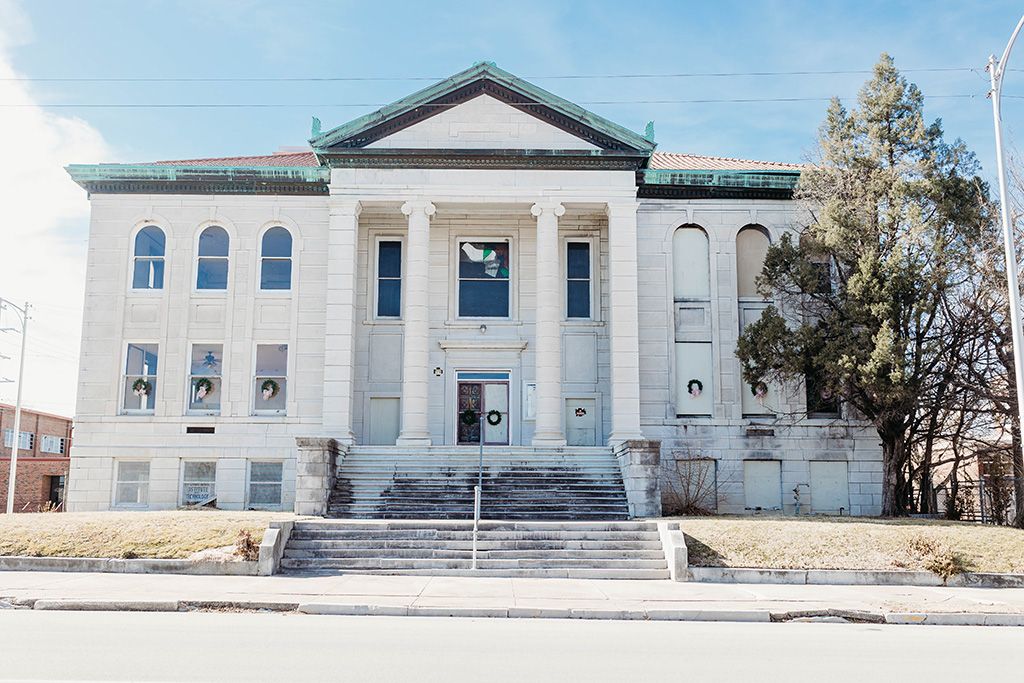
When Laurie Anderson first saw photos of Joplin’s historic Carnegie Library online, she thought the listing had to be too good to be true.
“It was so beautiful and the architecture was so lovely, I thought the listing was a scam,” she said.
But curiosity, and a long-held desire to take on a meaningful preservation project, pulled her north from Northwest Arkansas to see the building in person. As she turned onto Ninth Street, the limestone structure came into view, and any doubt disappeared.
“I distinctly remember turning off of Main Street and seeing the building for the first time,” Laurie shared. “I thought, ‘Oh wow, it is a real building,’ and then, ‘I have to try to buy this.’”
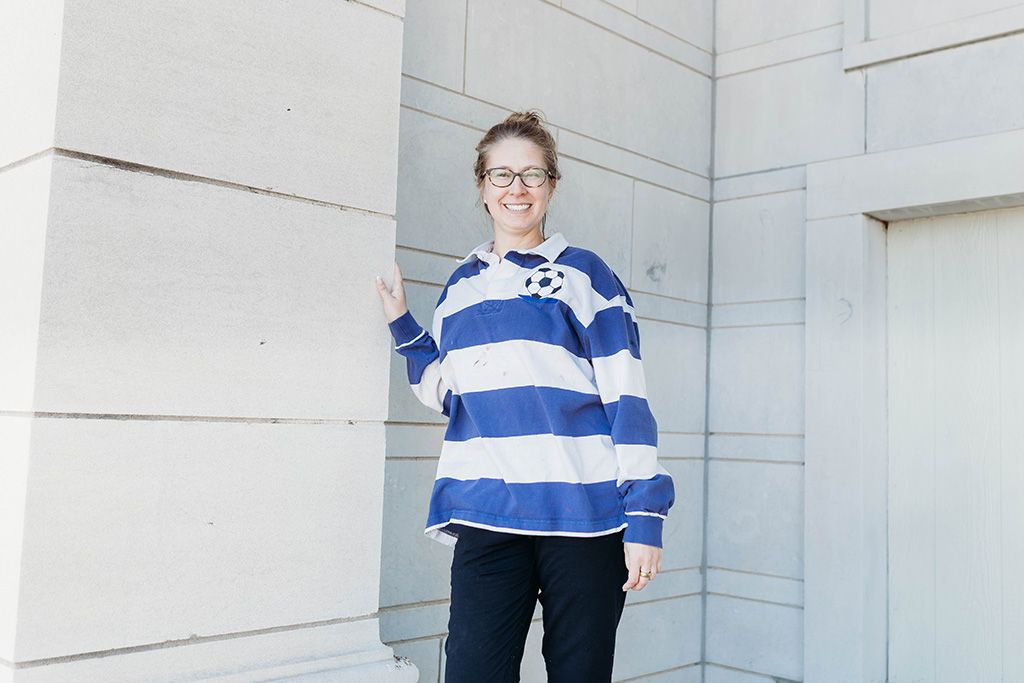
That moment marked the beginning of a new chapter for the Joplin Carnegie Library, a structure that has quietly anchored generations of memories and now stands poised for renewal under Laurie’s stewardship.
Built by a Community, Loved by a Community
Before discovering the building online, Laurie knew little about the library’s past. That changed quickly once she began digging into its history.
“I immediately started researching,” she said. “It was so fascinating to learn about its history as the city’s public library - how it was a movement by the people of the city of Joplin who wanted a public library for their town and worked to get the funds and approval needed.”
Like many Carnegie libraries built in the early 20th century, Joplin’s was not simply gifted to the city; it was the result of civic determination. Residents advocated for a permanent public library, secured local support and partnered with Andrew Carnegie’s philanthropic foundation to make it a reality.
Though the city’s public library later relocated, the building itself never faded from the community’s collective memory. Laurie said she was struck by how deeply connected Joplin residents still feel to the space, even years after it stopped functioning as the city’s main library.
That connection has revealed itself in unexpected ways, often through personal stories shared by residents who stop her to talk.
A Place of First Books and Lasting Memories
As a lifelong reader and book lover, Laurie has been especially touched by the memories people associate with the library.
“I have met many people who have told me stories of walking into this building to check out books when they were young,” she said. “I love hearing these stories and people’s fond memories of the hours they spent here in their youth.”
For many, the Carnegie Library was more than a building; it was a place of discovery, curiosity and quiet refuge. Laurie believes that sense of belonging is intrinsic to public libraries everywhere.
“I think all public libraries hold a special place in the lives of their patrons,” she said. “It has been an honor to have residents approach me and tell me their stories and memories about this building.”
Those stories now form an invisible layer of the restoration, one that influences how she thinks about the building’s future as much as its past.
Discoveries Beneath the Dust
When Laurie purchased the library, she knew she was taking on a major rehabilitation project. Fortunately, a structural report completed shortly before closing confirmed the building was fundamentally sound.
“I knew it was in good condition structurally,” she said. “I had seen photos online and did a couple walkthroughs before purchase, so I wasn’t really surprised at the condition.”
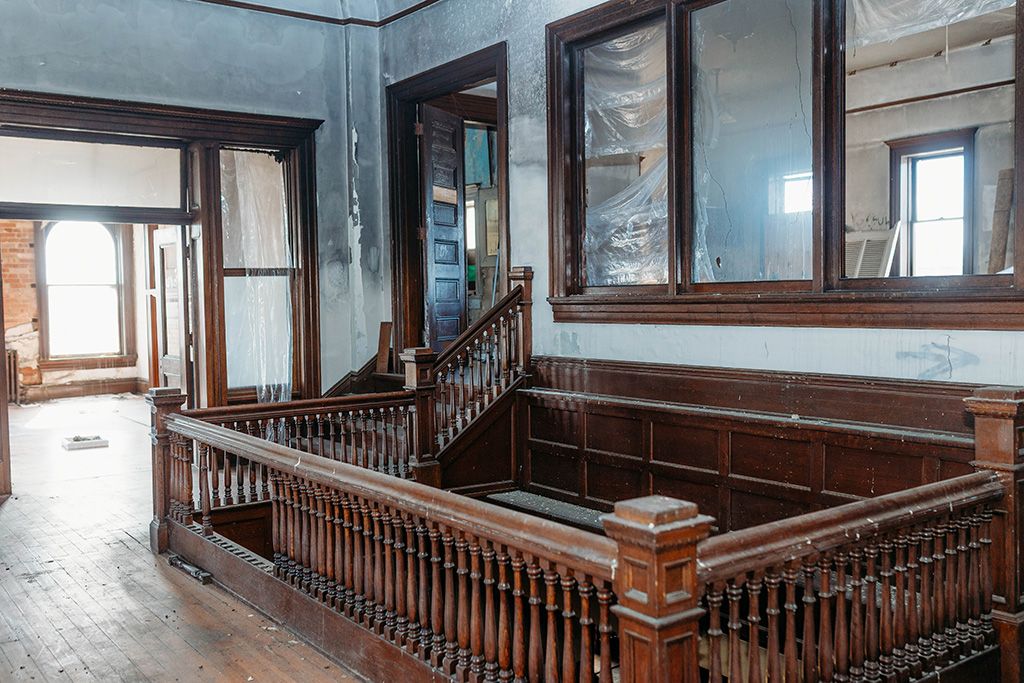
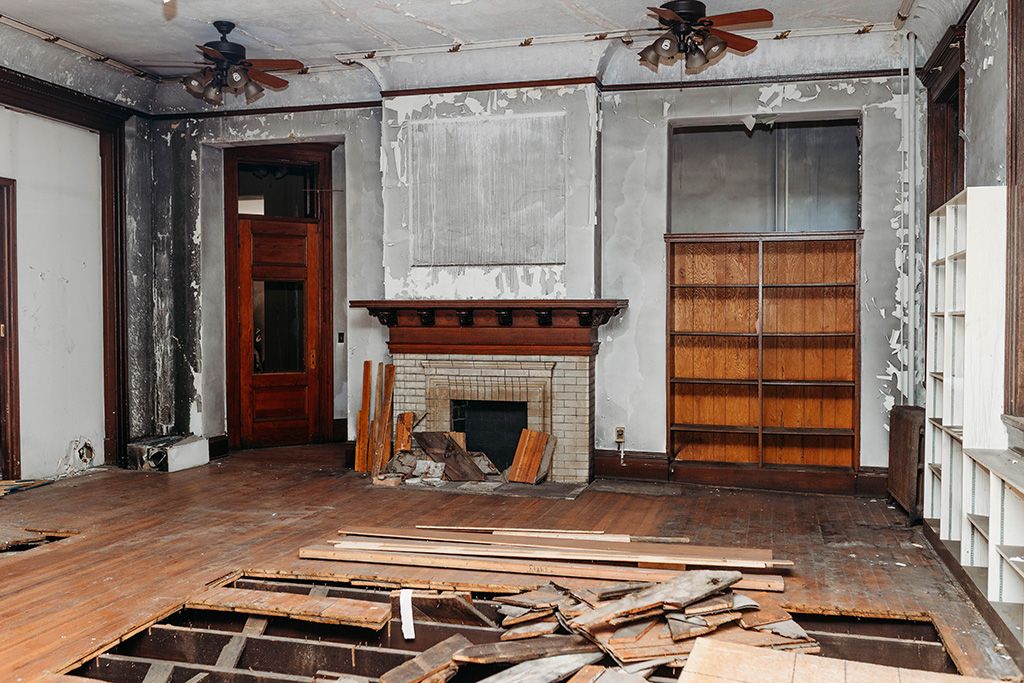
That doesn’t mean the work has been easy. Ceiling leaks have proven more plentiful than hoped, and years of neglect left debris piled high in places. Yet some of the most memorable moments have come from what lay hidden beneath that neglect.
“There have been more good surprises,” Laurie said. “Finding intact marble flooring under knee-high debris; finding original wood pieces amongst the piles of debris that can be reinstalled; and finding beautiful wood floors under layers of smoke and soot.”
Each discovery reinforces her belief that the building deserves careful, thoughtful restoration, one that honors its original craftsmanship rather than replacing it.
Preserving Beauty, Embracing Function
That philosophy guides Laurie’s approach to balancing historic preservation with modern needs.
“I really don’t want to change almost anything about the building,” she said. “It is such a classic style and design. I think it is so beautiful and timeless.”
Still, certain updates are unavoidable. Electrical systems, plumbing and accessibility must meet current standards. Rather than viewing those requirements as compromises, she sees them as opportunities.
“For things that need to be updated,” she said, “I’m enjoying researching new developments that can give modern convenience without taking away from the architecture of the building.”
The goal is not to freeze the building in time, but to allow it to function fully in the present without erasing its past.

A Vision for Bringing People Together
While much of the community has been curious about Laurie’s plans for the library, her vision has been clear from the start, shaped by both the building’s layout and her professional background.
“The current plan is to open the library building as an event rental space,” she said. “I’m an event planner by trade, so this is what jumped out to me when I saw this gorgeous building.”
The building’s layout makes it especially versatile, accommodating everything from large-scale events to smaller, more personal gatherings such as lunches, book clubs and meetings.
Importantly, Laurie does not see the building as a private venue reserved for a select few. Her intent is to restore its identity as a public space, one that once again welcomes the community inside.
“I would like to honor the building’s origins as a public space,” she said, “and have spaces that host things such as local artist shows, local musicians, city meetings, etc., where lots of people can come in and enjoy the building again.”
A Community Space, Reimagined
That emphasis on accessibility and community use has resonated strongly with local organizations.
“I’ve spoken to several Joplin-area committees, groups, companies and organizations,” Laurie said, “who have said they would love to be able to use the space for shows, graduation celebrations, exhibits, lessons, art, gatherings—all sorts of great ideas.”
In her view, the library’s next chapter should feel like a continuation of its original purpose, even if the activities inside evolve.
“Libraries are spaces for the people,” she said. “This building has that origin story and history.”
That philosophy also shapes her resistance to turning the building into a single-use or closed-off space.
“I don’t at all envision the final project as a building that only a few people ever work inside,” she said. “I hope it remains a central and much-loved building in Joplin.”
The Long Road of Preservation
Historic preservation is rarely quick, easy or inexpensive, and she entered the project with clear eyes.
“I knew it would be a multi-year timeline. I don’t expect a fast flip.”
The financial realities are equally daunting. With renovation costs projected at $1 million or more, Laurie acknowledged that funding would be part of the journey. What sustains her through the challenges is a mix of experience, perspective and determination.
“Now that I’m almost 40 years old,” she said, “there’s just not much that scares me anymore.”
She also finds meaning in the hands-on nature of the work, especially when collaborating with her father on projects they can tackle themselves.
“I really overall enjoy the process,” she said. “I love a good project. Something you can do with your two hands and when you’re done, you can see the process and say, ‘I did that!’”
Beyond personal motivation, she is driven by a larger sense of responsibility.
“I was afraid if I didn’t try, this beautiful, historic building could fall further into disrepair and maybe be knocked down one day,” she said. “I just knew that if I could help save it, I really wanted to do that.”
Stewardship, Not Ownership
Looking ahead five or 10 years, Laurie hopes the story people tell about the Carnegie Library is not about her decisions alone, but about care.
“I hope people will say they are glad it had a steward who truly loved it,” she said.
She is realistic about the fact that not every decision will please everyone.
“You’ll never please everyone with your decisions,” she said. “There will always be people who will disagree with some things I may do.”
But she views her role through a long lens, one defined by stewardship rather than ownership.
“With our magnificent buildings, like the Joplin Carnegie Library, you’re just a temporary custodian during their hopefully very long life,” she said. “I hope people will say that my tenure was one of great stewardship.”
For a building that has already lived many lives, that commitment may be exactly what ensures it continues to serve Joplin for generations to come.
