
The Recovery Community Mourns the Loss of Mike Miller
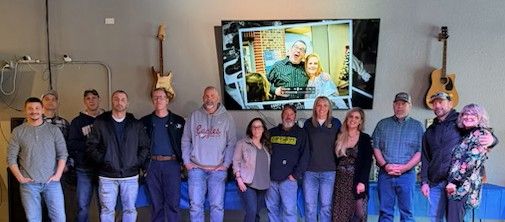
Miller was instrumental in the start of ASCENT Recovery Residences
Unexpectedly in December, Teddy Steen, executive director of ASCENT Recovery Residences and The ROCC (Recovery Outreach Community Center) lost her cousin Mike Miller. What makes this a loss to the Joplin recovery community is Miller helped Steen start ASCENT Recovery Residences, a last resort for addicts in the judicial system.
“Mike and I grew up together and also got into drugs together,” Steen said. “We would always end up at Grandma’s and had so much fun together. But, I got sober, and he didn’t. Eventually, he went through a program in Atlanta and became sober.”
That program was MARR, and when Steen was ready to start a recovery program, she asked Miller for help. They visited the MARR facility and were given the program curriculum. That was in 2008, the same year the recession hit, and Miller was in the sub-prime mortgage field. He lost his job and girlfriend, so Steen convinced him to come to Joplin and help start ASCENT. From 2008-2016, Miller ran the program and made an impact in the non-profit and recovery community.
“We would not be where we are today if it wasn’t for Mike sticking to the rules,” Steen said. “He was bigger than life. We grew up together and were very close. His passing leaves a big, huge hole.”
Below is a letter Steen received from Mark McDonald, the primary counselor for ASCENT men. When Miller left in 2016, McDonald became the program director. Read at Miller’s memorial service, the letter captures the spirit and heart of Miller.
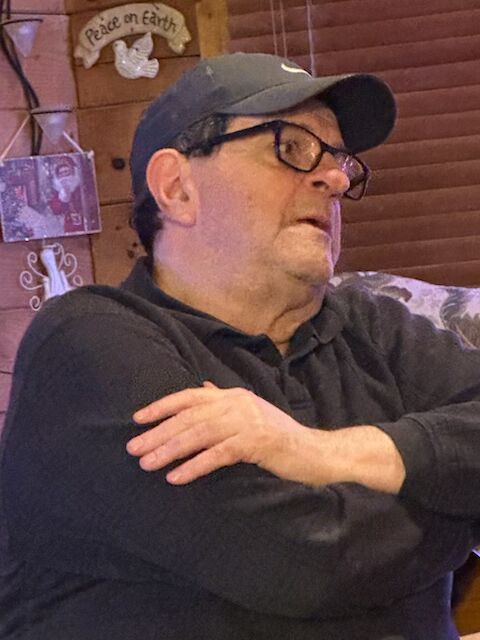
The Essence of Mike Miller
I want to start by acknowledging something important: He would probably hate that we’re all sitting here pretending he was perfect. That wasn’t his style. What he was, though, was real. Consistently. Unapologetically. And in a world — and especially in recovery spaces — where people can hide behind language, titles or good intentions, he had this incredible ability to see through the bullsh-- and call things what they actually were. And because of that, you always knew where you stood with him.
There was no guessing. No wondering what he really thought. No passive-aggressive kindness. If he agreed with you, you knew it. And if he didn’t, you definitely knew it. But it was never about tearing people down — it was about clarity. About honesty. About not wasting time pretending something was working when it wasn’t.
That kind of honesty is rare. And it’s even rarer when it comes with deep knowledge.
He understood recovery — not just as a concept, but as a living, breathing process. He understood that recovery isn’t just about stopping something. It’s about becoming someone. And he knew that timing, readiness and accountability mattered just as much as compassion.
That understanding shaped so many people, myself included.
When I first started working in recovery housing, I was all heart. And I don’t say that as a compliment to myself — I say it because I didn’t know any better yet. I wanted to help everyone.
If someone needed a place to stay, I wanted to help. If someone was getting out of jail, I wanted to help. If someone was desperate, scared or homeless, I wanted to help. And he was the one who gently, and sometimes not so gently, helped me understand that compassion without boundaries isn’t always helpful. In fact, sometimes it does harm.
He taught me the importance of bridling compassion. Not eliminating it. Not hardening your heart. But slowing it down enough to ask better questions. Is this person ready? Are we setting them up for success or for another failure? Are we responding to need or to readiness?
He helped me learn how to step back and see the whole picture instead of getting pulled into the urgency of someone’s crisis. Because crisis is loud. It demands immediate action. And when you care deeply, it’s easy to confuse urgency with appropriateness.
He didn’t do that. He could sit with discomfort. He could tolerate the tension of saying “not yet.” He understood that recovery housing isn’t just a roof — it’s a responsibility. And that lesson changed how I work. It changed how I showed up. And honestly, it changed how many people I was able to help successfully instead of temporarily.
That’s mentorship. Not telling you what you want to hear. Not rescuing you from hard truths. But helping you grow into someone who can hold both compassion and accountability at the same time.
What I also appreciated — and what I think many of us appreciated — was that he didn’t romanticize recovery. He didn’t sugarcoat it. He didn’t pretend that good intentions could substitute for behavior change. He knew that people could say the right things and still not be ready. And he wasn’t offended by that reality, he respected it.
That’s a strange kind of respect, but it’s real. Because when you stop pretending, you give people a chance to rise to the occasion when they’re ready. And if you ever worked with him, you know he could be tough. But he was never cruel. He could be blunt. But he was never careless. And if he believed in someone — really believed in them — you felt that, too.
You felt challenged. You felt seen. And you felt expected to show up differently. That expectation is part of his legacy.
His influence didn’t end with the conversations he had or the decisions he made. It lives on in the standards he set. In the questions we ask ourselves now before saying yes. In the moments when we pause instead of rushing to fix.
Every time we choose clarity over comfort. Every time we choose readiness over rescue. Every time we choose honesty over politeness. That’s him. Still teaching. Still mentoring. Still shaping how we do this work and how we treat people with dignity instead of desperation.
And maybe the greatest gift he gave us wasn’t answers, but discernment. The ability to tell the difference between help and harm. Between kindness and enabling. Between what feels good in the moment and what leads to change. That’s not easy work. And it’s not popular work. But it’s necessary.
So today, as we celebrate his life, I hope we don’t just remember him fondly. I hope we remember him accurately. With all his honesty. His sharp insight. His refusal to pretend.
And I hope we carry forward the lessons he taught, not just in our work, but in how we live. To care deeply. To speak plainly. To see clearly. And to trust that real compassion includes boundaries.
Thank you for letting me share. And thank you, all of you, for carrying his influence forward in ways that matter.
