
Neosho Area Habitat for Humanity, Crowder College Career & Technical Education Center Partnership on Firm Foundation
Providing reasonably priced housing for those who couldn’t otherwise afford a home of their own is an impressive initiative that a couple of outstanding organizations in Neosho have teamed together to lead, and they are working in unison to ensure all goes well from beginning to end.
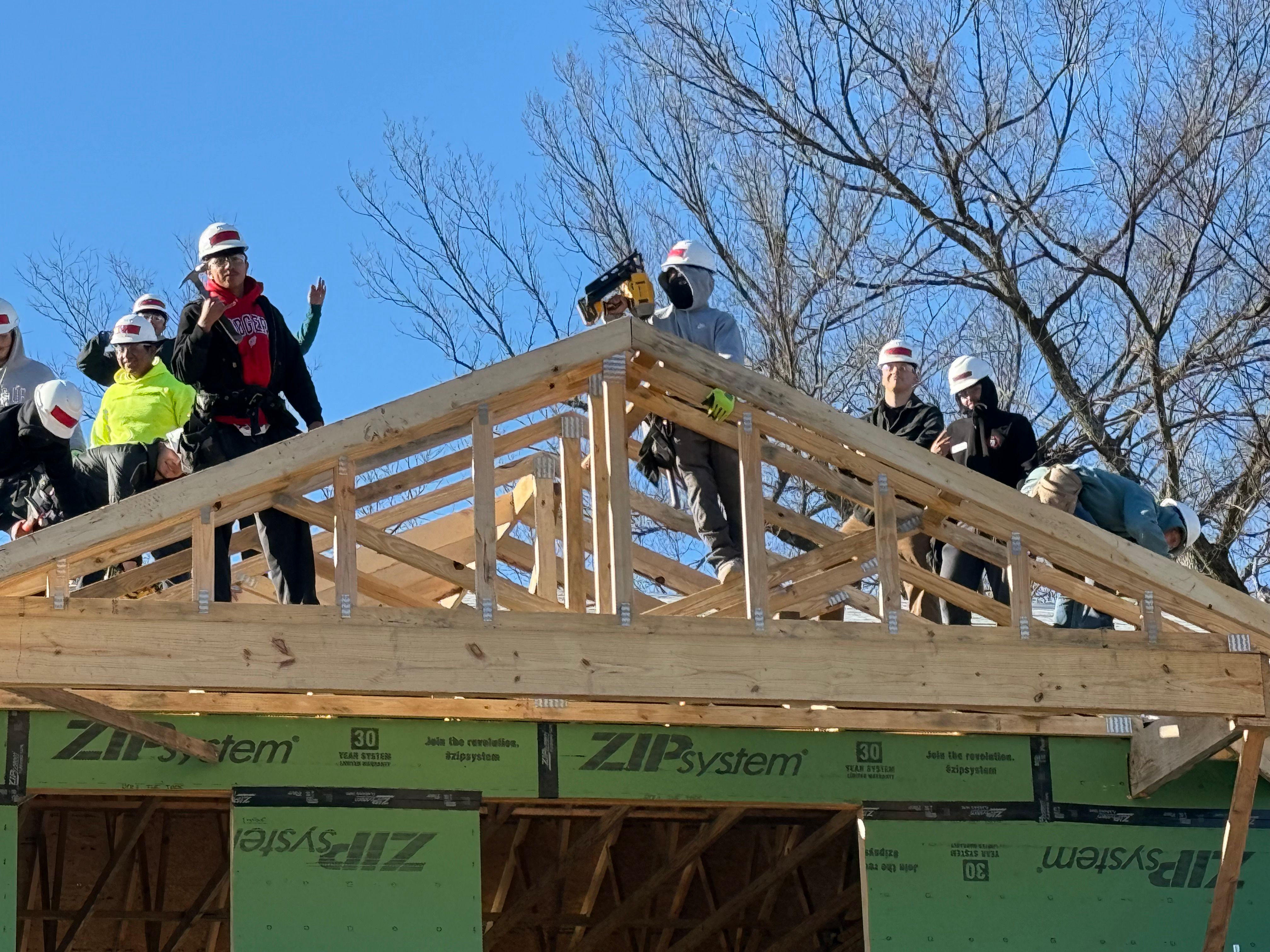
The Neosho Area Habitat for Humanity (NAHFH) and Crowder College Career & Technical Education Center (CTEC) programs, along with labor-intensive support from students at several Missouri high schools (Diamond, East Newton, Neosho and Seneca) are in the middle of their initial building project right now.
Crowder Director of Secondary CTE Dana Cobb says, “Student work begins approximately Sept. 1, after they’ve completed their OSHA 10 training. Then, the students work all year, alongside Scott Cianci (CTEC Building Trades instructor) and Tom Pelligrin (Habitat project manager) to build the house with the goal of completing it by May.
“Start to finish, the students develop the skills of building a house over the course of an entire school year. Any remaining tasks are finished by Habitat for Humanity volunteers once school lets out for the summer.”
Considering the overall timeline of readying a home for move-in from his perspective, NAHFH President John Styron says, “We are on our first actual house, so this (timing of completion) is a bit theoretical at this point. Scott believes we can do one house per year. Generally, we hope a house can be completed within 12-18 months.”
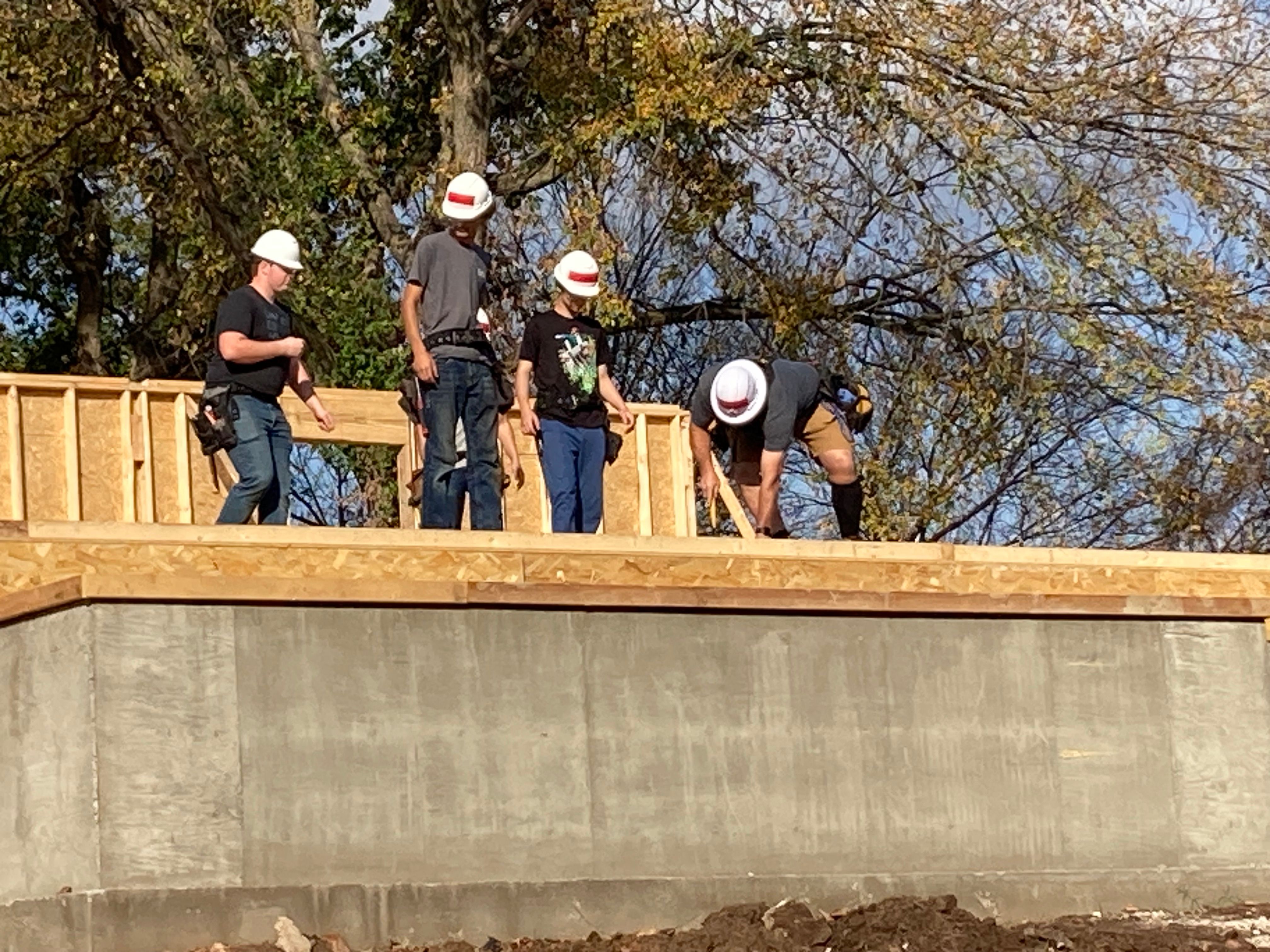
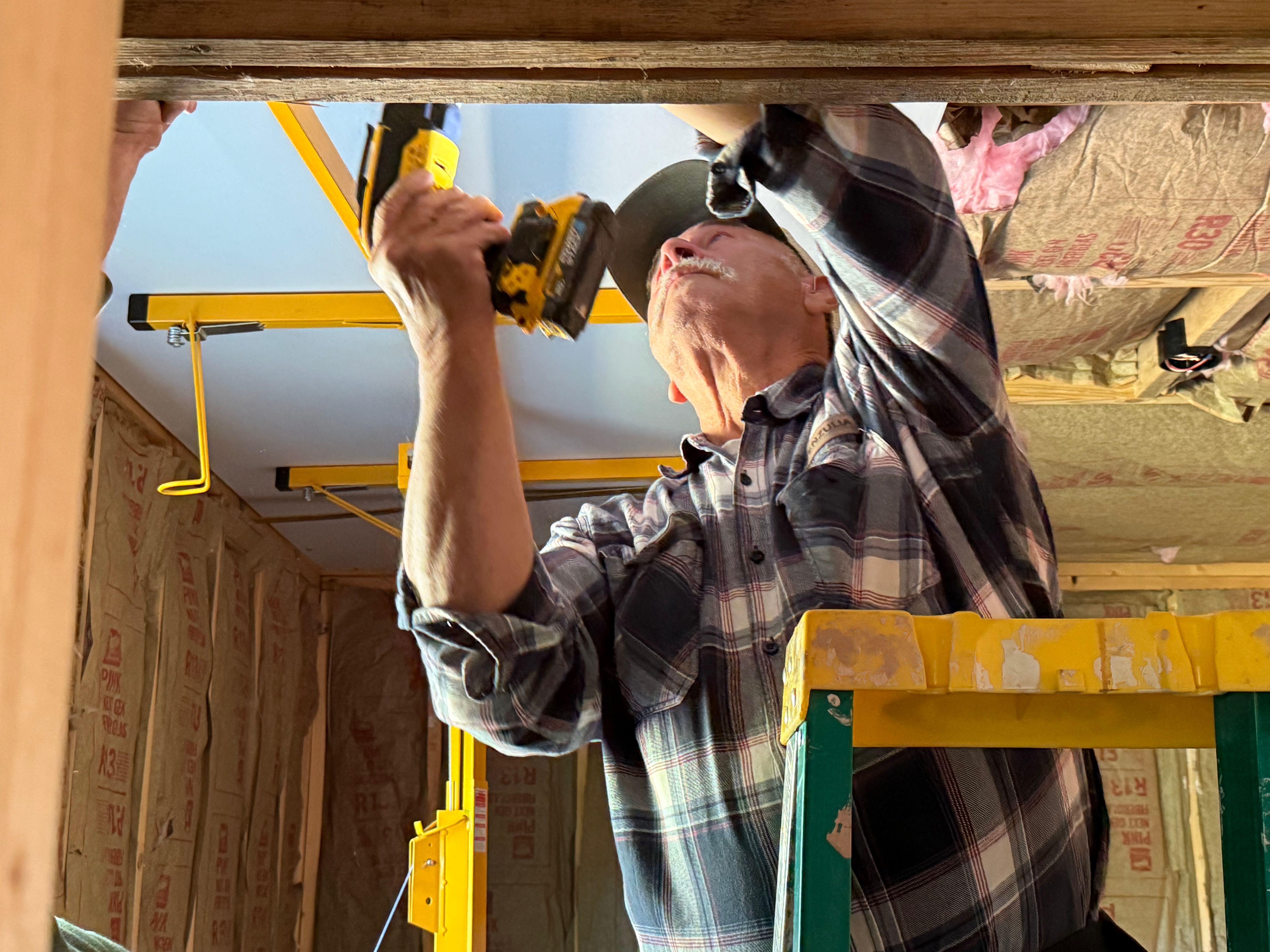
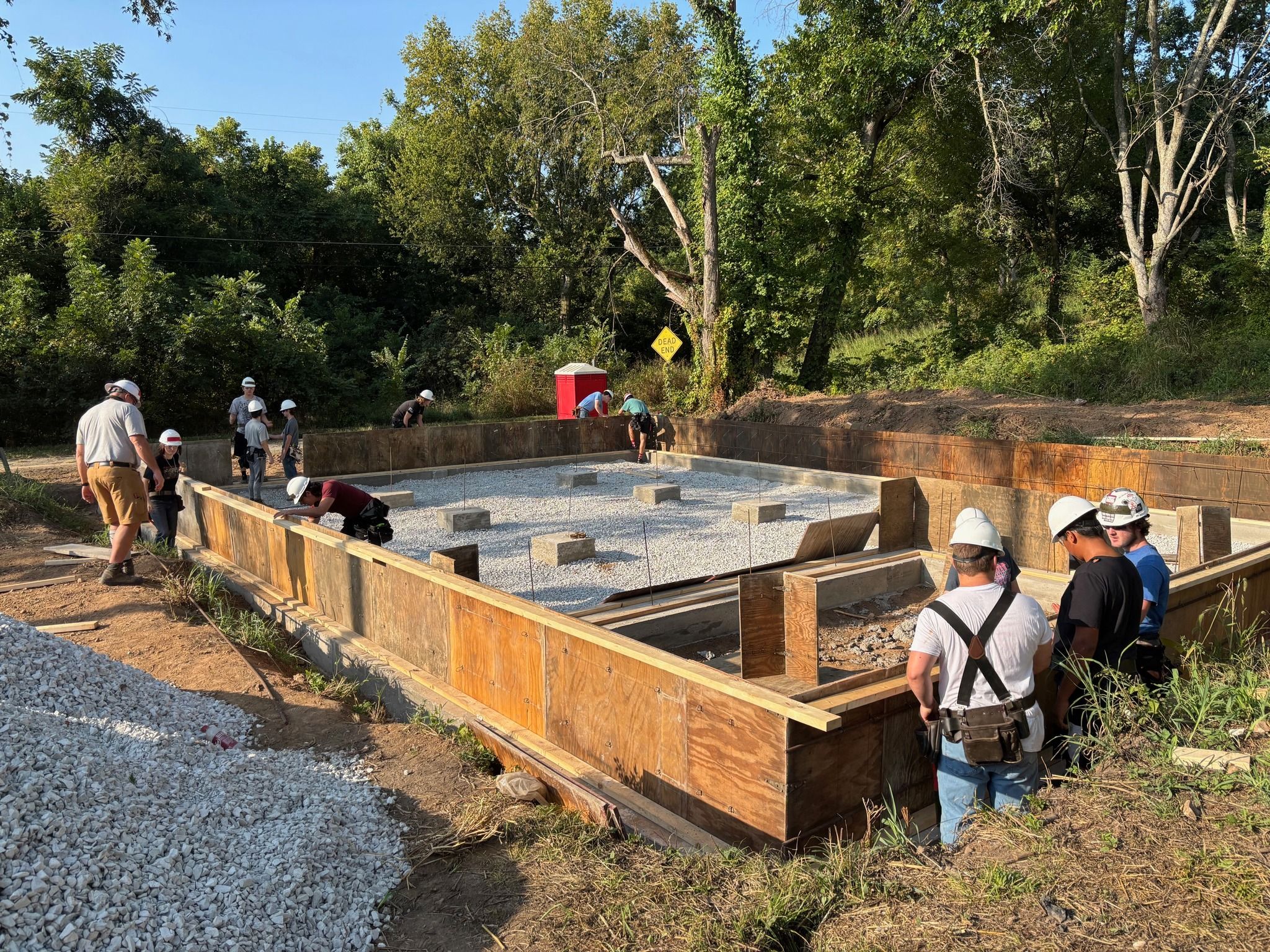
These students are given a wide range of tasks throughout this process, and Scott says they do everything from “excavation, setting and pouring the foundation, framing, outside finish, roofing, interior rough-in, plumbing, electrical and interior finish, including insulation, hanging sheetrock, flooring and finishing trim.”
John says, “Students do the foundation/concrete work, framing, siding, roofing, the whole works. If we need specialty help, we’ll contract it out. But for the most part, it’s Scott and the students.”
Dana applauds Scott’s leadership in guiding an eager group of youth, and she says, “This project continues to be successful due to the dedication and experience of Scott. He rarely takes a day off, while ensuring his students not only have consistency but are at the job site every day when the weather allows.
“Scott has high expectations of his students and yet meets them where they are, while providing the instruction needed to be successful. Scott’s heart for his students and his community is the driving force that keeps such a huge project moving forward. The students want to learn and work. That, combined with excellent instruction and support creates a successful work environment.”
While Scott and the group of students remain focused doing the hands-on work, John says, “NAHFH provides land and materials. Which means, of course, we’re continuously building relationships to help with funding and looking for new organizations that want to assist us as well.”
While sharing a detailed account of how this concept was originally conceived, John says, “In about 2022-23, we had two NAHFH board members with deep connections to Crowder College: Dr. Kent Farnsworth (formerly served for 20 years as president of the college) and Dr. Phillip Whitt (formerly part of Crowder’s faculty).
“At the time, the Crowder Technical Education folks were bringing students to Habitat build sites occasionally to help our volunteer laborers and gain real-world building experience. Dr. Witt was familiar with a program in Nevada, Missouri, where high school students had built a classroom house and used it as a base for further construction projects on the property.
“NAHFH was in the process of purchasing a series of contiguous lots in a north Neosho neighborhood. Dr. Witt had the idea the Nevada model might be adapted for our use.
“Students could build a classroom house on one of the lots, then work out of the classroom to build more houses on adjacent lots. The classroom house is, essentially, a modest three-bedroom home but not finished inside. There are few interior walls, so we have a large open area for a classroom.
“This property was key to the partnership. Having the classroom on location would have many advantages, including simplifying student transport. Technical Education students (juniors and seniors) were bussed to Crowder from five Newton County high schools.
“Without the classroom house, students would be forced to travel again from Crowder College to the build site. Now, they can go directly to the classroom and build site.”
And from there, specific roles were presented. John says, “With the Nevada model in mind, Dr. Farnsworth and Dr. Witt began discussions with the Crowder CTEC program staff and the college president. They worked out a memorandum of understanding that outlines expectations and areas of responsibilities.
“Essentially, NAHFH supplies the house plan, building materials, build sites and handles the overall project management. And the students, under the direction of Scott, will take care of the construction work.”
“This particular project not only provides much-needed housing to our community it’s also a one-of-a-kind learning experience for our students,” Dana says. “Other career and technical schools’ building trade programs build tiny houses, deer stands or other projects that fit inside a shop.
“Crowder CTEC students are given the real-life experience of a true job site with the challenges of late deliveries of materials, bad weather and other unforeseen issues cropping up. They also see the progress of a structure from the ground up.”
Scott is passionate about this effort, and he says, “Seeing the students grow, not only in their skills but their respect for others and the ability to maneuver through social situations with more ease is special. The relationships they build with their peers and the community is exciting. These students witness something tangible because of their hard work.”
John adds, “It makes me happy to know that every time a student pulls the trigger on that nail gun, he or she is not just building a house that will be so very meaningful to a family in need, they are also building skills for a future job or career.”
Together, NAHFH and Crowder CTEC are finding solutions that help families move into new homes and provide area youth a way to learn invaluable skillsets while seeing first-hand how they are making a difference in someone’s life.
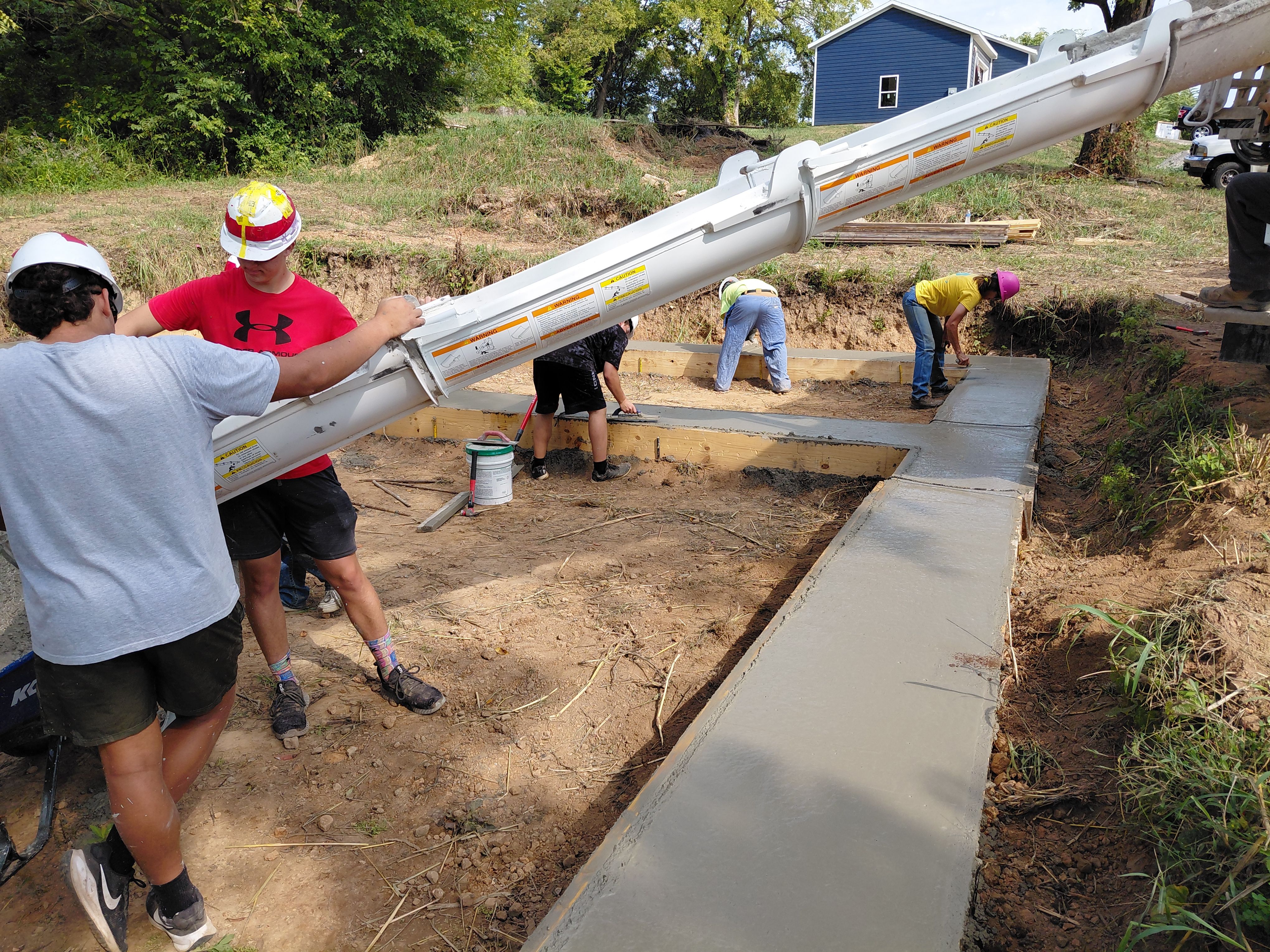
Neosho Area Habitat for Humanity/Crowder College Career & Technical Education Center Program
NAHFH Mission
The mission statement on neoshohabitat.org says, “Seeking to put God’s love into action, Neosho Area Habitat for Humanity brings people together to build homes, communities and hope.” But John Styron, president of NAHFH, likes to say it this way: “Our mission – to provide decent, affordable homes for people in need But, the big idea, or philosophy, that drives the mission is the Christian precept held by the original founders of Habitat International: We are to be our sisters’ and brothers’ keepers. It’s a ‘do unto others’ enterprise.”
Crowder College CTEC Program Mission, Vision & Philosophy
Mission – Building a civil, serving, literate, learning community of responsible citizens.
Vision – Changing lives and strengthening communities – one person at a time.
Philosophy – The Crowder College family lives by the principles of servant leadership. The faculty and staff believe modeling leadership through service creates an environment of academic excellence and encourages students to lead by serving in their communities.
