
KCU Joplin’s First Hire Continues to Build KCU’s Staff 10 Years Later
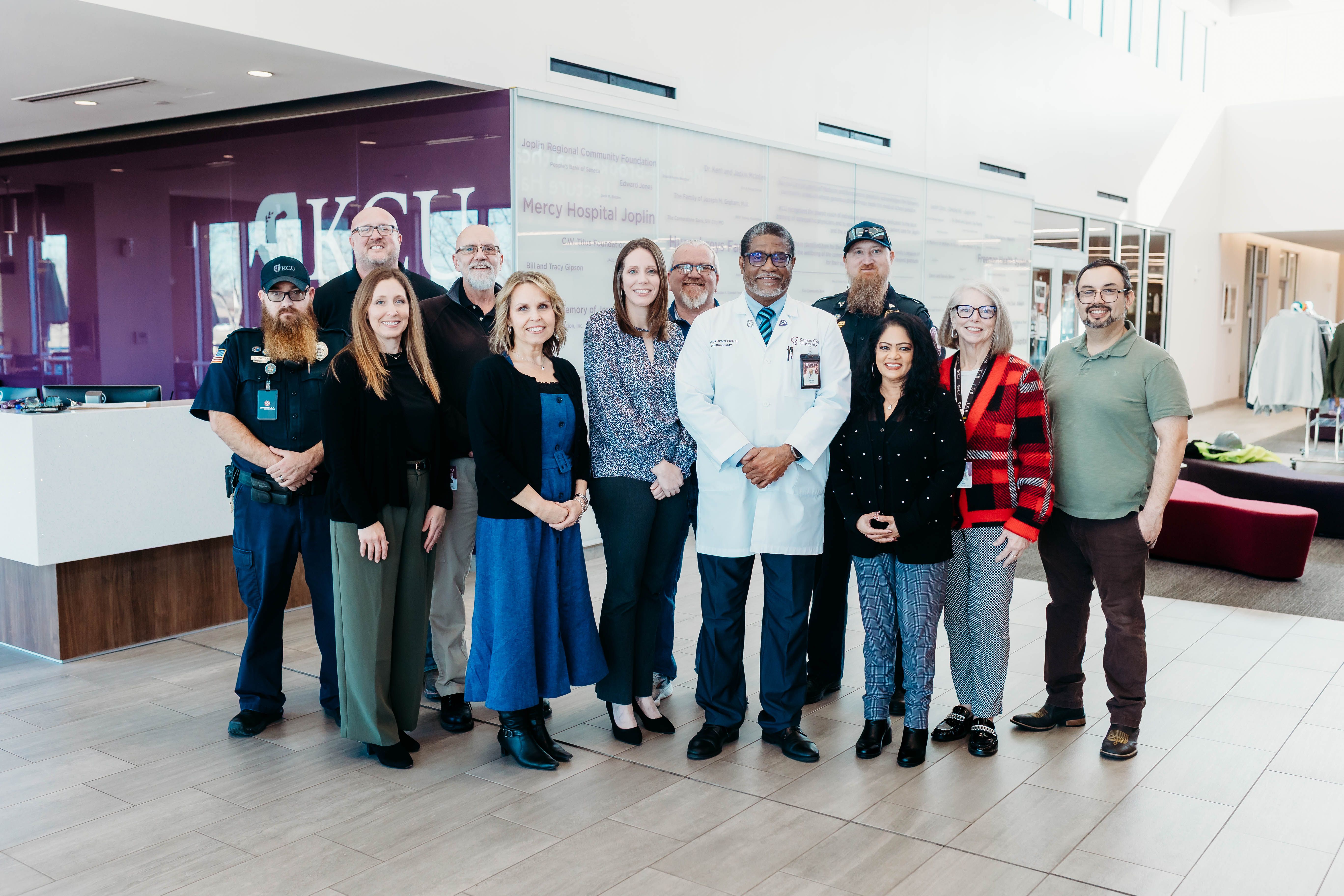
Kansas City University’s presence in Joplin, Missouri, began with a long-range plan to expand medical education beyond Kansas City and address physician shortages in a largely rural area. That vision took shape over years of planning, early hires and community partnerships, ultimately reshaping both health care training and the future of health care in the Four State area.
First Hires
Jamie Hirshey remembers the moment she first heard that a medical school might be coming to Joplin. At the time, she was working at Freeman Health System when word began circulating about KCU’s plans to open a second campus. She did not wait for a job posting or an announcement. The very next day, she reached out to the university. As she recalled, “They didn’t have a complete playbook. They were still figuring out what a second campus in Joplin would look like.”
What university leaders did know was that they needed someone who understood health care, people and the community. Hirshey was hired in January 2016 as the first employee on the Joplin campus. Her role was clear, even if the path forward was still taking shape.
“They hired me so I could hire everyone else,” she said.
Before a single student arrived, nearly 2 years were spent planning for the campus and the people who would eventually fill it. Early staff members worked out of rented space on the third floor of a bank building on Maiden Lane, sharing tight quarters while the permanent campus took shape blocks away.
Hirshey brought more than a decade of experience in human resources at Freeman Health System, along with firsthand knowledge of how difficult it could be to recruit physicians to rural areas. That background informed early hiring decisions and helped shape the collaborative culture that followed.
Jenni Casey joined the campus as the seventh employee. She had worked with Hirshey previously and trusted her instincts.
“If this was something Jamie wanted to join, I know it would also be a good fit for me,” Casey said.
Much of the early work involved creating systems and processes from scratch. As Casey put it, “We built it from the ground up.”
With so many unknowns in the early days, the team learned quickly.
“In the beginning, we really needed people to be flexible, pivot and adapt. It was new to all of us,” she said.
Casey started in operations, handling whatever needed to be done. That included figuring out how to launder lab coats, ordering cafeteria trays and managing logistics while the building was still under construction. Later, she moved into the human resources department.
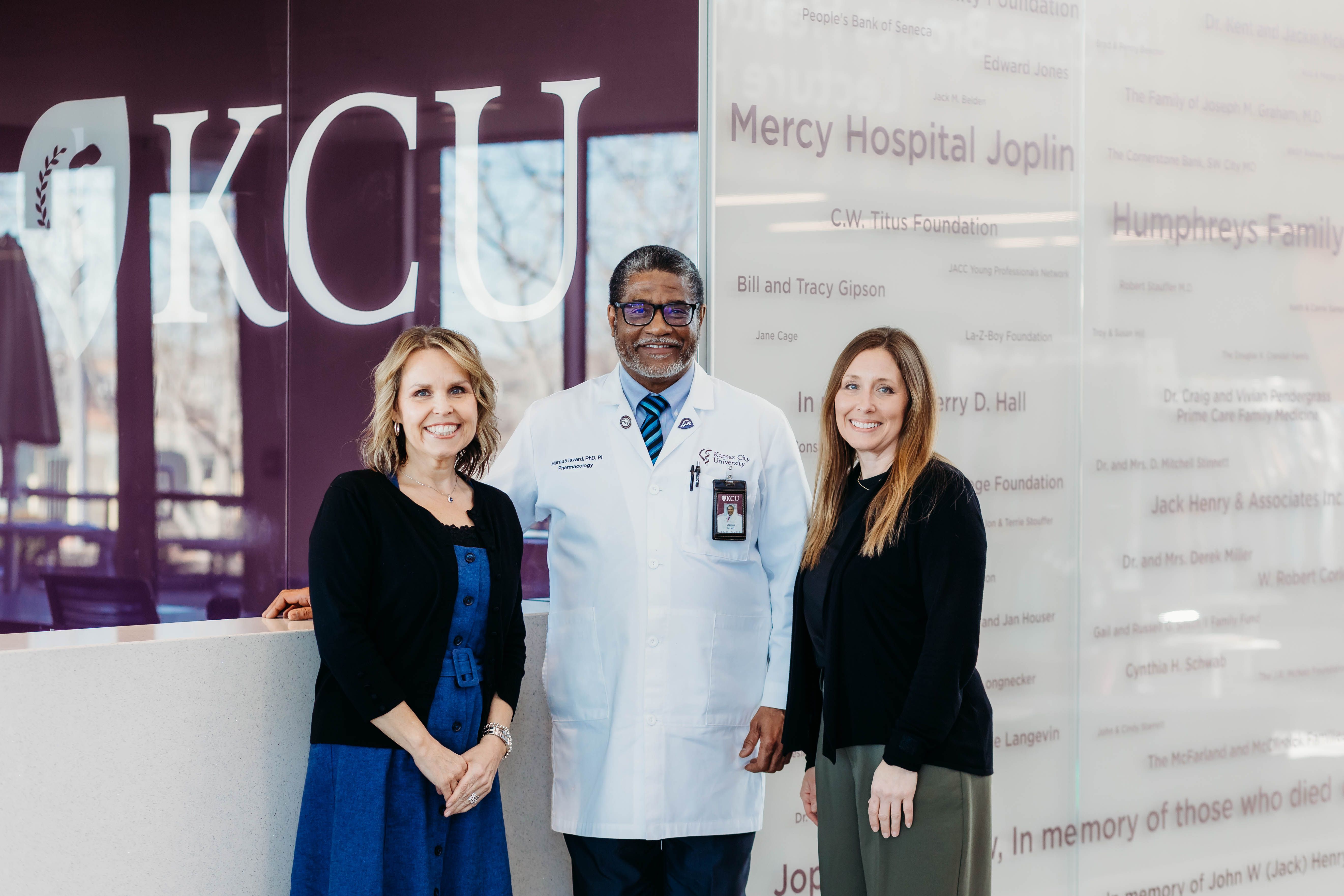
Dr. Marcus Iszard joined Kansas City University in 2017. He is a pharmacologist, toxicologist and educator who became the school’s professor of pharmacology. He quickly learned that teaching students across two campuses would require a different approach than he was used to as an instructor. Students in Kansas City and Joplin learned together, sometimes in person and sometimes through live or recorded lectures. As Dr. Iszard explained, “It was a challenge to develop lectures and help students who were watching through a screen understand.”
Opening a Second Campus
KCU opened its Joplin campus in 2017, becoming the first new medical school to open in Missouri in nearly 50 years and the only medical school in the southwest region of the state. The opening marked a significant step in the university’s expansion beyond Kansas City.
The campus itself carried added meaning for the community. Built on the former location of Mercy’s temporary hospital following the 2011 tornado, the campus stands as a visible marker of recovery and long-term investment.
“KCU came out of something so tragic,” Hirshey said, “We are a beacon for continued growth of our community. We are drawing others to our region.”
In 2023, KCU expanded again with the opening of its College of Dental Medicine in Joplin, adding another layer to the university’s role in addressing health care needs in the region.
One University, Two Campuses
From the beginning, the plan was to operate as one institution across two locations. As KCU expanded beyond its original campus, leaders were intentional about sharing faculty, resources and decision-making between Kansas City and Joplin.
“Having one university on two campuses has driven our decision-making in a lot of ways,” Casey said.
Despite operating across two campuses, staff say there is a sense of togetherness that sets KCU apart. Hirshey described it as a shared culture rather than separate locations.
“One of the things that stands out about KCU is that we are all under one roof,” she said. “Even though we are two campuses, we are united by the same mission.”
Many professors and staff work across both campuses, regularly traveling between Kansas City and Joplin. To make that commute easier, the university provides a shuttle, allowing faculty to be physically present on campus and giving students the chance to see their professors in person rather than just on a screen.
COVID and Continuity
When the COVID-19 pandemic disrupted higher education nationwide, KCU was better prepared than many institutions. Students in Kansas City and Joplin had already been learning together across two campuses, sometimes in shared classrooms and sometimes through live or recorded lectures, which meant systems for remote instruction were already in place and classes were able to stay on track.
For faculty, the transition still required adjustment.
“Covid was the best way to test our system,” Dr. Iszard said. “I just had to learn to present from my living room.”
Despite the disruption, coursework continued.
“We’ve had many challenges, but we’ve hit the marks, and we continue to hit them,” he said.
The experience reinforced decisions made years earlier about shared resources and technology, allowing instruction to continue during an unprecedented period.

Meeting Regional Health Needs
Research showed the region was underserved for medical care, a challenge that remains today. While access to care in rural communities across the area is still limited, the presence of Kansas City University has begun to make a difference over time by training health care providers locally.
From Dr. Iszard’s perspective, timing and geography mattered.
“We started at the right time, we were the first of now three medical schools in the area,” he said.
As programs developed, the work gained attention beyond the immediate area.
“People are paying attention to what we are doing and our system is being replicated in other places,” Dr. Iszard said.
Kansas City University has also built partnerships with nearby institutions, including Pittsburg State University and Missouri Southern State University, creating additional connections between higher education and health care training in the region.
That visibility has helped strengthen a growing pipeline of locally trained health care providers.
Students complete clinical rotations throughout the region, and some graduates have begun returning as faculty. Others have chosen to stay in the area to practice medicine.
“It’s a full circle to see students come back to impact and serve our community,” Hirshey said.
Beyond educating future providers, the university serves as a resource for the community by sharing expertise and offering access to affordable dental care through its College of Dental Medicine.
Nearly 1,000 students are now enrolled across Kansas City University’s programs, attending classes, training in local hospitals and clinics, and putting down roots in the community. What began as a small group of new hires has grown into a campus that has physically and figuratively changed Joplin’s landscape. The university’s buildings reshaped a section of south Joplin, and the people who study and work there contribute to the city in many ways.
Students and Campus Culture
Casey said prospective students often ask what makes KCU Joplin special.
“We always highlight the school’s culture and the community that it’s created,” she said. Faculty see having two distinct campuses, each with its own atmosphere, as a strength. Students drawn to a larger city often choose Kansas City, while those looking for a smaller-town experience often choose the Joplin campus
Today, KCU’s Joplin campus is shaped by its students, faculty and the work happening inside and beyond the classroom. Ten years after its first employee was hired, the campus reflects years of careful planning and a sustained commitment to health care education. The university continues to expand programs, educate students and invest in the communities it calls home.
