
Camp Crowder Documentary to Reveal How Pivotal Moments in History Unfold in Unlikely Places
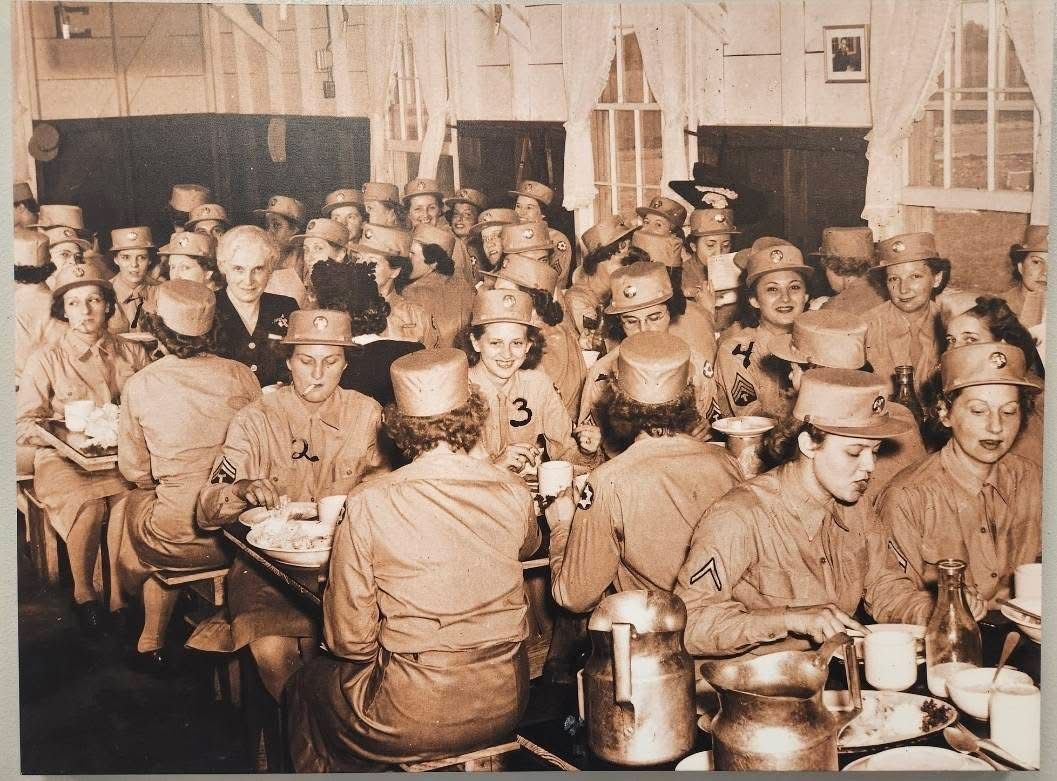
The Newton County Tourism Council recognizes there’s significant historical relevance to documenting the complete, eight-decades long story of Camp Crowder in Neosho, Missouri, while ensuring the events that took place there are never forgotten.
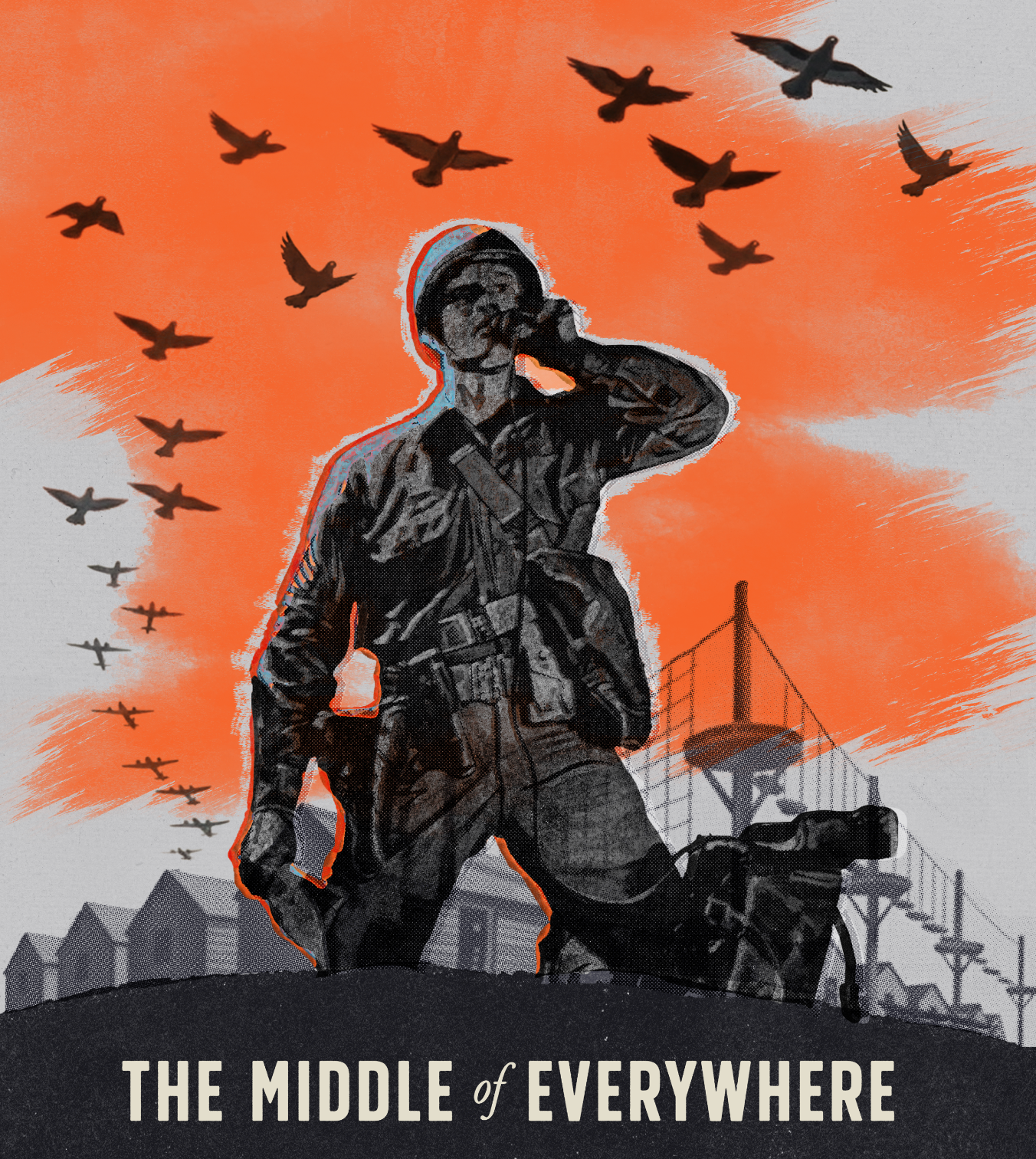
“We are making ‘The Middle of Everywhere’ because Camp Crowder reveals how pivotal moments in American history often unfold far from places we usually look,” says Mike Corcoran, who is serving as film director for the Camp Crowder documentary. “What began as a World War II Signal Corps Training Center became a crossroads of wartime innovation, social tension and sacrifice.
“Later, it became a bridge into the Cold War and the Space Race through rocket and missile work in Neosho. This film exists to connect those chapters and show that world-shaping history doesn’t just happen on the coasts or in capitals. It happens in overlooked places whose impact is far greater than their footprint.”
Jeff Lebeda, who is part of the documentary team as journalist/researcher, says, “The contribution Camp Crowder and the Rocketdyne era made to the national war and space effort is a big deal in and of itself. Preserving history anywhere is worthwhile, but Neosho has something special to preserve.
“It literally went from ‘the middle of nowhere’ to fulfilling one of the most critical functions of World War II. Then, moving on to its role in the Space Race is something that, not just Neosho, but all Americans, have reason to be proud about.”
Mike believes this documentary is a vital undertaking that can help change skepticism to appreciation for all that took place here, and he says, “The public perception of Camp Crowder isn’t very high. It was often viewed in the past as ‘just’ a Signal Corps Training Center or currently, it’s considered ‘just’ a National Guard Base.
“But when you take a deeper dive look at the wild amount of important people who came through Camp Crowder in the 1940s, the groundbreaking research and development that occurred in the ‘50s and ‘60s during the Cold War and the Space Race, or what’s been established with Crowder College, it’s impressive at every stage of the process. We want to show why Camp Crowder should be celebrated and not ignored.
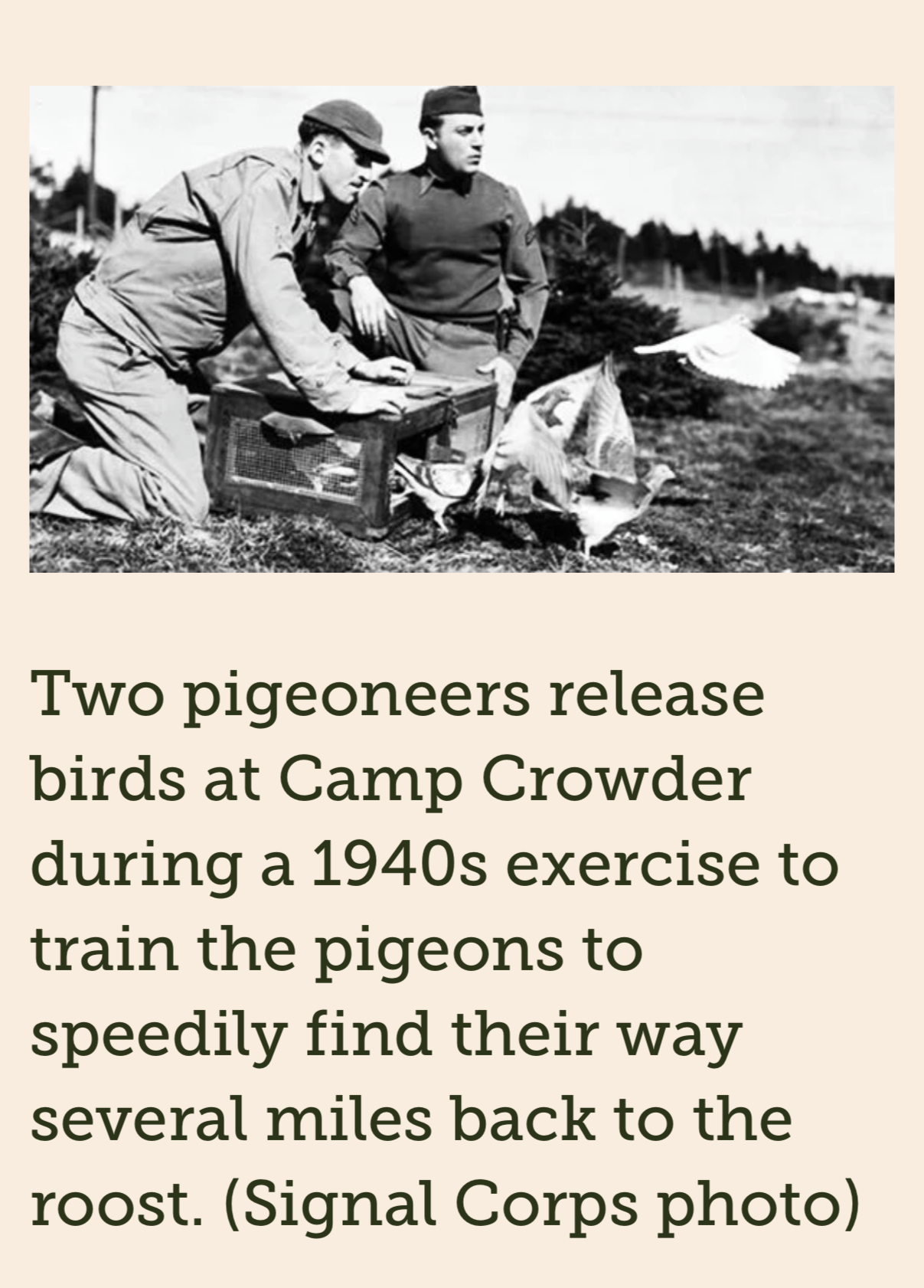
“We are making ‘The Middle of Everywhere’ to highlight how a largely overlooked place had such a global impact. At Camp Crowder, the effectiveness of the U.S. Army Signal Corps helped shape the outcome of World War II by ensuring communication, coordination and speed across theaters of war.
“In the decades that followed, Crowder’s legacy extended into the Cold War and Space Race, with work in Neosho contributing to the missile and rocket programs that carried the world from battlefield signals to spaceflight.”
Mike continues, “The film reframes this local history as a story of worldwide consequence, while showing how a single place helped change how wars were fought and how humanity reached beyond earth.”
In taking us back for a glimpse at the very beginning, Mike says, “Groundbreaking for the camp was on Aug. 30, 1941. The attack on Pearl Harbor (Dec. 7, 1941) unified construction efforts, and the camp began bringing in new recruits even before it was finished.
“By Feb. 18, 1942, the first trainees began arriving at camp. Because it was still under construction at the same time of operation, the exact opening date is a little murky, but the camp was dedicated on April 11, 1942.”
From the beginning to present day, Mike says, “The camp served many functions over the years. During the war, Signal Corps troops were trained there, and it housed many prisoners of war from Germany and Italy.
“The largest U.S. Army Signal Corps Training Center during World War II was at Camp Crowder. At its peak, Camp Crowder trained hundreds of thousands of Signal Corps personnel.
“It was the Army’s primary hub for communications instruction, from radio and telegraphy to emerging electronic warfare skills. Its scale and throughput were unmatched, and the effectiveness of the Signal Corps trained there had a direct impact on Allied command, coordination and battlefield success across multiple theaters of the war.
“The camp had a lot of nuanced storylines underneath the surface. Black soldiers served at the camp in many minor roles. German POWs were said to have had many fond memories of their time there in captivity.”
“Japanese American soldiers (Nisei) also came through the camp,” Jeff Lebeda says. “They were assigned to menial duties in the immediate aftermath of Pearl Harbor, then went on to serve honorably in Europe, while performing translation and prisoner interrogations in the Pacific.”
“Most notably, after the war, (Camp Crowder) transitioned into a hub for industrial and aerospace use,” Mike says. “During the Cold War and Space Race, Camp Crowder played a significant role in rocket engine manufacturing and testing.
“As the Cold War intensified, portions of the former camp and the surrounding area were repurposed for defense manufacturing, most notably through facilities operated by Rocketdyne and related contractors. This work supported missile propulsion and rocket engine development at a moment when the U.S. was racing to counter Soviet advances and establish technological dominance.
“This was a big deal precisely because of timing and geography. In the late 1940s and through the 1960s, national security depended on rapid innovation in missiles, spaceflight and communications, and the federal government deliberately pushed sensitive defense work inland and away from vulnerable coastlines and population centers.
“Camp Crowder’s existing infrastructure, skilled workforce, rail access and security profile made it an ideal site. The result was a rare continuity – a place that had trained soldiers to move information faster during World War II now helped power the machines that defined deterrence, the Space Race and America’s global posture.”
Interestingly enough, and perhaps ironically, Mike says, “In a sense, Crowder did not simply survive the war, it evolved with history while remaining relevant at the exact moment the stakes shifted from winning battles on earth to competing for technological supremacy beyond it.”
The past, present and future have all been woven together here, and Jeff says, “While the troops came from everywhere and moved on, residents from the region were involved initially in the construction of Camp Crowder and civilian jobs during the war.
“Add in the Rocketdyne era, the establishment of Crowder College and the continued presence of the National Guard, and you’ll find that the history has been passed down through family members and is still part of the community today.”
Jeff says residents of Neosho and surrounding areas have reason to be proud of this rich history: “The ‘special’ comes from the people themselves – past, present and future. From those first displaced by the initial camp area to the transition to the space era, and then to a permanent education campus, Neosho has answered the call every time.
“It never gave up and keeps giving back and expanding its reach. Jan. 26 was the ribbon cutting for the new Advanced Training and Workforce Center in Joplin, and a recent Zenith Economics study shows that Crowder College contributes nearly 1,000 jobs and more than $57 million in annual labor income with an overall economic impact of $128 million.”
History of Camp Crowder & Upcoming Documentary Fast Facts
Preserving the History: Newton County Tourism Board of Directors President Steve Roark suggested producing/filming a documentary.
Initial Discussions: Meetings to talk about the documentary began in March 2025.
Timeframe: Completion date is still being discussed with an international search for more first-hand accounts from those most familiar with Camp Crowder. Expected completion is late 2026 to early 2027.
Documentary Team: Executive Producers Steve Roark and Rudy Farber; Journalist & Researcher Jeff Lebeda; Historian & Researcher Charlie Brown; Film Director Mike Corcoran; Producer Drew Kimble; Documentary Treasurer Tom Higdon; Website Coordinators Pete Hall and Sheena Standingbear
REQUEST FROM STEVE ROARK & MIKE CORCORAN:
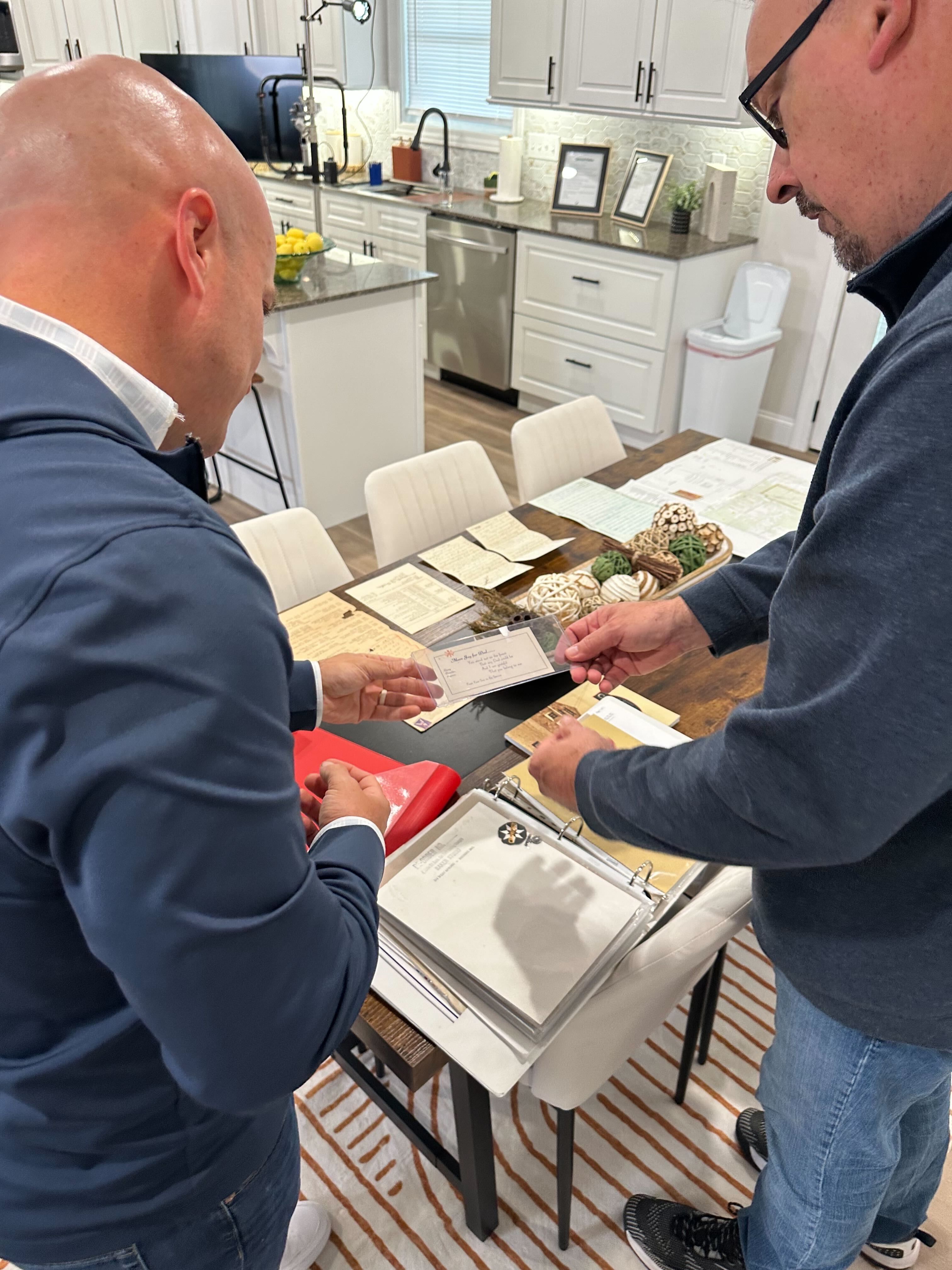
“If you or your family have any connection to Camp Crowder, Rocketdyne, Teledyne or any other era of Camp Crowder history, we want to hear from you. We’ve uncovered an extraordinary amount of history through newspapers, archives and formal research, but the most important pieces are often the ones that never made it into official records.
“Personal letters, journal entries, photographs, uniforms, tools, souvenirs or even a single story passed down at the dinner table can add depth and truth no document ever could. If you have first-hand accounts or memorabilia tucked away in a drawer or attic, you may be holding a missing piece of this story. This film depends on the voices and experiences of the people who lived it, and we’re asking the public to help bring that history fully into the light.” Any information, please reach Steve Roark at 417-825-4623 or via email at roarkranch@yahoo.com, or call Mike Corcoran at 317-965-5110.
