
Breaking Barriers on the Rails: Anita Horton’s Journey in a Traditionally Male-dominated Industry
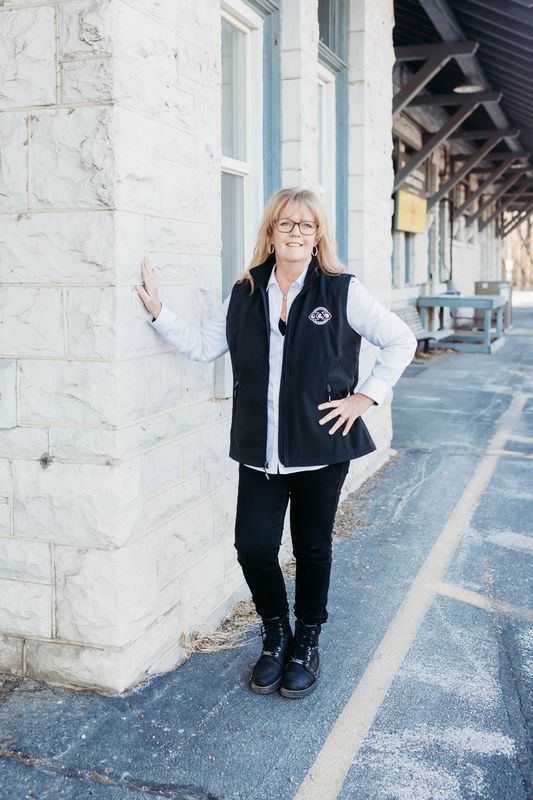
Women’s History Month is a time to recognize the women who have shaped industries, challenged assumptions and quietly built careers that open doors for the next generation. Some stories are about firsts or headlines. Others are about perseverance, curiosity and showing up every day willing to learn. Anita Horton’s career in the railroad industry belongs firmly in the latter—and that is precisely what makes it so powerful.
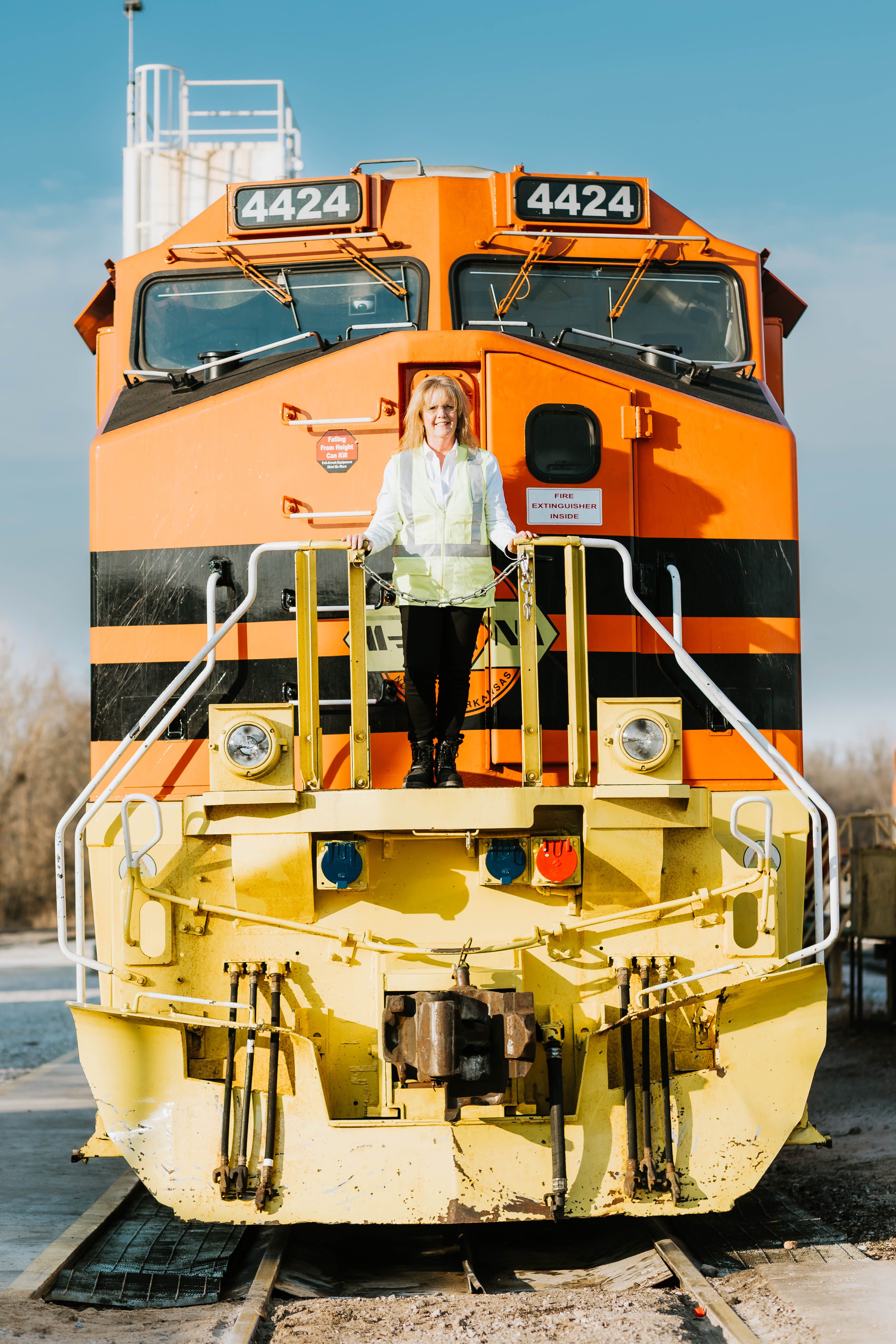
Anita Horton is the director of sales and marketing for the Missouri & Northern Arkansas Railroad Company, Inc., and KWT Railway, Inc., both part of the Genesee & Wyoming family of railroads. Over a career spanning more than three decades, she has worked her way up in an industry historically dominated by men, without ever setting out to “break barriers.” Instead, she focused on learning the business, serving customers well and doing the job with integrity. The result is a career that reflects the quiet evolution of women’s roles in transportation and a reminder that progress often happens one professional decision at a time.
An Unexpected Beginning
When Anita reflects on how her career began, even she admits it wasn’t something she planned.
“First, I’d like to say the fact that I am in sales and working for a railroad kind of surprises me when I really think about it,” she says.
Her degree was in marketing and management, and like many people early in their careers, she had a narrow idea of what sales looked like, and railroads weren’t part of that picture.
“When I was younger, I always thought of a salesperson as very outgoing, could talk about anything to anybody kind of person, and that was not me,” she shares. “And I didn’t know a thing about railroads except that they delayed you at crossings.”
The opportunity came unexpectedly when a former coworker left to become office manager at the Missouri & Northern Arkansas Railroad, which had just leased a line headquartered in Carthage, Missouri. They were looking for clerks and asked if Anita might be interested.
She interviewed, was hired and stepped into an industry she knew almost nothing about.
Learning the Language of the Railroad
Anita’s first role was as a clerk, and it was anything but simple. She handled customer service, coordinated railcar placement and pickup, completed waybills, communicated with train crews and ensured railcars were accurately tracked within the railroad’s system.
“To me, the railroad has its own language and acronyms,” she says. “It took me a good month to actually learn what I was doing before the ‘lightbulb’ went off to understand what and why I was doing it.”
That moment, when the pieces began to connect, became foundational to how she approached her career. Beyond learning railroad operations, she also had to understand her customers’ industries, production cycles and transportation needs.
“I learned to be inquisitive, ask lots of questions and listen to the customers to learn their needs,” she says.
That curiosity and willingness to learn would eventually guide her into sales and marketing, a transition that came with new responsibilities and new challenges.
Stepping Into a Male-dominated Space
Entering the railroad industry as a clerk wasn’t intimidating. Moving into sales and marketing was another story. “I was very nervous. I was very young and a female. I didn’t know what to expect,” Anita recalls.
Most customers, conferences and industry meetings were overwhelmingly male. She often found herself navigating unfamiliar territory, not just in learning the business, but in learning how to move confidently in rooms where she was the exception.
“There were times and still are that I am the only female in the meeting,” she says. “But that doesn’t even cross my mind. I am there as a professional in my field, not a gender.”
That mindset didn’t come overnight. Early on, she leaned on the support of colleagues who helped mentor her through the transition.
“I had two other sales colleagues at the railroad that helped me transition and mentored me with navigating through some of this,” she says.
Those relationships reinforced an important lesson: success didn’t come from proving herself as a woman in the industry, but from understanding the business and serving customers well.
Earning Confidence Through Experience
Like many professionals early in their careers, especially women in male-dominated fields, Anita felt the pressure to perform flawlessly.
“Certainly, being so young and new to the RR industry, of course I wanted to do a good job, make no mistakes,” she says. “I wanted to bring in new business.”
Surrounded by seasoned professionals, she admits she was intimidated at times. But she also discovered something encouraging.
“I quickly learned that there were some good mentors out there that became good friends and were very helpful in helping me become a better railroader,” she says.
That blend of humility and confidence, knowing what she didn’t know and being willing to ask, became a defining trait of her leadership style.
Leadership Built on Service and Integrity
When asked what helped her rise into leadership, Anita doesn’t point to ambition or titles. Instead, she focuses on values.
“Customer service, integrity, respect, communication and teamwork,” she says. “Those are the ones I’ll hit.”
In the railroad industry, service is the product.
“We don’t sell a tangible product. The only thing we have to offer is our service,” she explains.
That service depends on collaboration, between sales teams, operations, crews and customers. Clear communication and mutual respect aren’t optional; they’re essential.
“Treat people right and do the right thing,” she says. “That’s what it comes down to.”
Redefining Success
Despite earning marketing and sales awards over the years, Anita is quick to deflect credit.
“I want to really just brag on my whole team,” she says. “Because without them, none of those awards would have been possible.”
She views success not as individual achievement, but as collective progress, especially in an industry where markets shift and business cycles change.
“I always want to grow carloads and replenish lost business above and beyond whenever possible,” she says. “But it’s always a team effort.”
That team-first approach has defined her career and strengthened the organizations of which she’s been a part.
Industry Change and Women on the Rails
Over 33 years, Anita has seen the railroad industry evolve dramatically, especially through technology.
“Smart phones, GPS technology and handheld devices that move rail cars in real time are all things that have occurred since I started,” she says.
But perhaps the most meaningful change has been the growing presence of women.
“I definitely have seen the change with more women in this industry than when I started. I see the first CEO of a railroad in my lifetime right now.”
Women are filling executive roles, operational roles and leadership positions across the industry.
“There are a lot more women in my company working from executives on down than ever before—and they’re doing a fantastic job,” she says.
Challenges That Remain
Despite progress, challenges still exist.
“Women are still less than 10% of the railroad workforce,” Anita shares. That statistic alone can be intimidating, and it often discourages women from considering transportation careers in the first place.
“Most women may not even consider working for a railroad because they think it’s for men only,” she says. “But that is a stigma that needs to be overcome.”
For Anita, visibility and storytelling are part of the solution - showing women what’s possible.
Advice for the Next Generation
Her advice to young women considering male-dominated industries is simple and direct.
“If it’s a job you are interested in, go for it. Don’t let the fact that you are a woman deter you,” she says.
She credits the railroad industry with providing a career that has never been boring, always evolving and deeply rewarding.
“I’ve learned a lot not only about my industry but about my customers’ industries and markets,” she says. “And the retirement and benefits are great.”
A Career of Continuous Learning
When asked what she would tell her younger self, Anita doesn’t talk about titles or promotions.
“You can always learn something in every situation - good and bad,” she says.
That lesson has guided her through decades of change.
“Life often shifts between feeling like you have it all figured out and feeling like you know nothing at all,” she reflects. “But the one constant is that you never stop learning.”
After 33 years, she’s still learning, and still growing.
“Change is constant, so expect it, embrace it and don’t be afraid of it,” she says. “Because without change, we don’t grow.”
Why Her Story Matters This March
During Women’s History Month, stories like Anita Horton’s remind us that history isn’t only written in milestones; it’s built through dedication, curiosity and the courage to step into unfamiliar spaces.
Anita didn’t set out to make history. She set out to do her job well. In doing so, she helped shape a more inclusive industry and paved the way for the women who will follow her down the rails.
