
A New Year, A New You: Redefining How We Feel in Our Skin
As the new year arrives, many of us feel that familiar pull to start fresh: to sleep better, eat better, move more or simply feel like ourselves again. Yet year after year, the same pattern often repeats: a burst of motivation in January followed by frustration, burnout or the quiet belief that we’ve somehow failed our resolutions.
According to Regional Manager Jen Creach of the new Serotonin Anti-Aging Center in Joplin, Missouri, that cycle is far more common, and far more human, than most people realize.
“At the start of the year, I see a lot of people come in feeling both hopeful and exhausted,” she says. “They are tired of quick fixes, fad diets and feeling like they are forcing their health journey with willpower alone. Most people actually want energy, mental clarity, better sleep and to feel good in their clothes, not just a different number on the scale.”
For Jen, who spent more than a decade as a registered nurse, the new year isn’t about reinvention or perfection. It’s about realignment: taking a moment to understand what your body is trying to tell you and giving it the support it needs to function at its best.
And that begins with shifting how we think about wellness.
Each January, people often approach health with a sense of urgency: fix everything, overhaul everything, change everything—and change it fast. But Jen says this mindset rarely leads to sustainable results.
“Start with awareness, not punishment,” she shares. “Instead of jumping straight into a strict diet or intense workout that you dread, begin by getting a clear picture of what is happening in your body, your sleep, stress, hormones, daily habits and overall rhythm.”
She sees many people who assume they have a motivation problem when they’re really struggling with underlying issues like nutrient deficiencies, inflammation or hormonal shifts that haven’t been addressed.
“People think they’re failing at willpower, but in reality, it’s often a chemistry problem.”
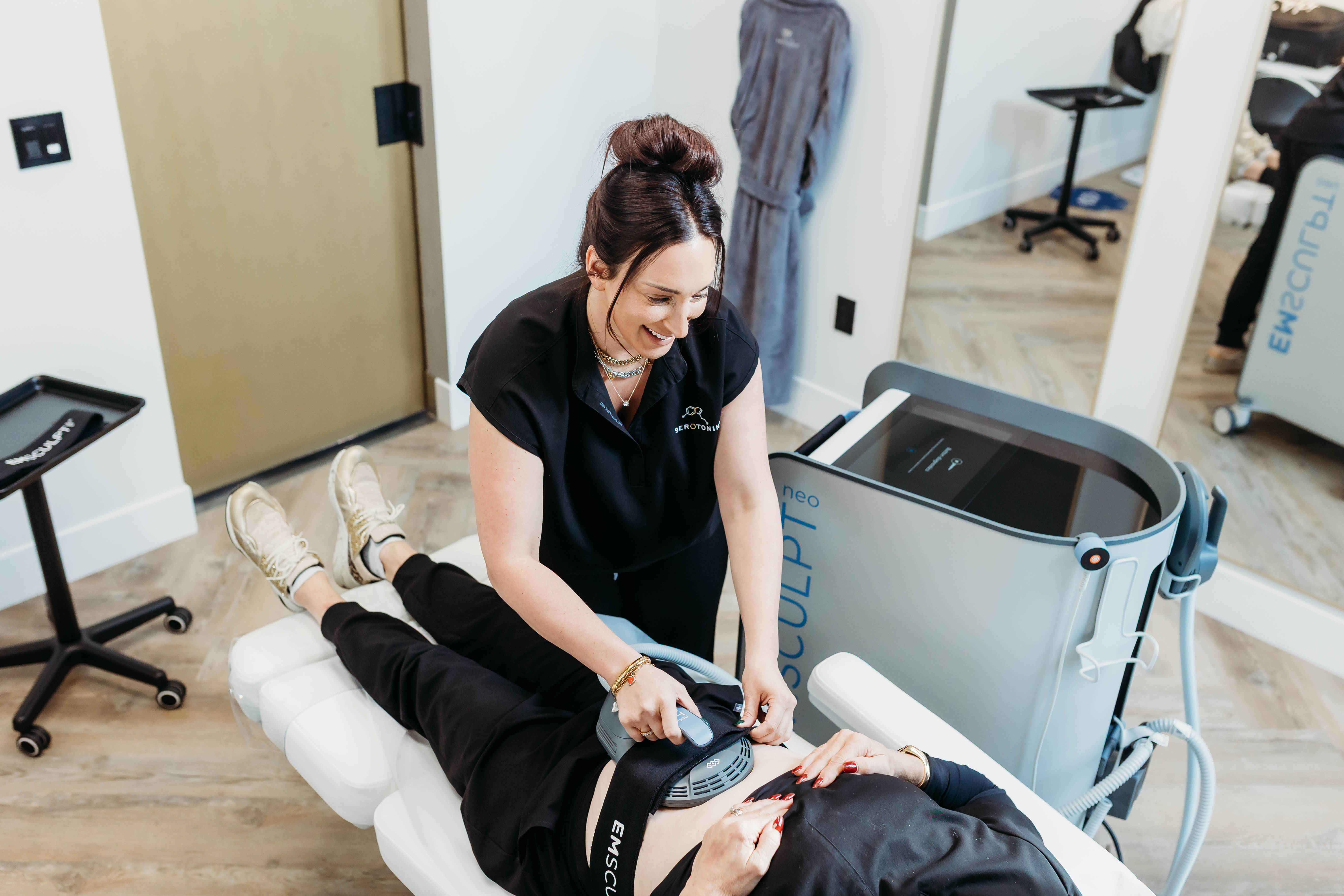
At Serotonin, that chemistry-focused approach includes tools such as hormone replacement therapy, peptide therapy, NAD+ support, IV therapy and Emsculpt Neo - a body-sculpting technology that builds muscle and burns fat simultaneously.
The goal, she explains, isn’t to hand over rigid plans or demand drastic lifestyle changes. It’s to help people better understand themselves so their goals are centered in self-awareness, not self-criticism.
When people talk about “getting healthy” in January, it often sounds like a list of restrictions: less sugar, fewer carbs, earlier mornings, tougher workouts. But Jen sees a healthy reset differently.
“A healthy reset is intentional and sustainable,” she says. “It looks like getting curious about your health, asking good questions and making changes you can still see yourself doing in three, six or 12 months.”
For some people, that reset may include prioritizing sleep, addressing stress, shifting nutrition or understanding how their body is changing with age. For others, it may include exploring supportive therapies to help them feel more energized or balanced. But the heart of it is always the same: small, meaningful steps that build momentum instead of burnout.
“What it should not look like,” she says, “is punishing yourself or doing extreme things for a few weeks and hoping they will magically fix everything. A reset shouldn’t leave you burnt out by February.”
In her work, Jen has seen how seemingly small, targeted changes can reshape someone’s confidence and energy in profound ways.
She recalls a patient who came in feeling drained: low energy, creeping weight gain and the sinking feeling that she no longer recognized herself. Instead of recommending a long list of sweeping changes, Jen started with a deeper look at what might be affecting how she felt. They made slow, intentional adjustments, and over several months, her sleep improved, her energy returned and her body composition began changing slowly, steadily, sustainably.
But the transformation went deeper.
“The best part was watching her walk in with her shoulders back and tell me, ‘I finally feel like me again.’ That’s the ripple effect a small change can have.”
Jen understands how overwhelming the new year can feel, especially with social media filled with trends, solutions,and “must-try” hacks.
“We take the pressure off the idea of all or nothing,” she says.
When someone comes in feeling discouraged or overstimulated by information, she steps back to look at the whole picture: health history, daily stressors, sleep patterns, habits and personal goals. Then she breaks it down into what she calls the next right step - one choice that builds confidence instead of stress.
“Maybe this month the win is better sleep. Next month, it might be feeling more energized. After that, physical changes start showing up. Sustainability happens when you stop chasing perfection and start building momentum.”

That momentum, she says, comes from feeling supported—whether through education, coaching or simply having someone who listens and helps guide the journey.
“It’s not a one-size-fits-all plan. It’s a personalized journey.”
One of Jen’s hopes is that Serotonin serves as a judgment-free starting point for anyone ready to feel better, whether they’ve been focused on wellness for years or are nervously walking into their first appointment.
“Some people come to us already committed to their wellness journey. Others walk in feeling overwhelmed and unsure where to start. Either way, I want them to feel seen, heard and supported.”
For her, optimizing wellness isn’t about chasing youth. It’s about helping people age confidently with energy, clarity and self-compassion.
“You don’t have to choose between feeling good now and aging well later,” she says. “You can have both.”
As people move into their 30s, 40s, 50s and beyond, she sees clear themes emerge.
“In your 30s, it’s about awareness and prevention,” she explains. “In your 40s and 50s, it becomes about recalibration. Your body is changing, and ignoring those shifts usually leads to frustration.”
But across all ages, she believes one mindset matters most: “The most meaningful change at any age is deciding you are worth the effort,” she says.
As the wellness conversation continues to evolve, Jen hopes the new year encourages people to rethink what it means to feel great at any age.
“Feeling exhausted, foggy or uncomfortable in your body is common, but it’s not a normal part of getting older that you have to accept,” she says.
She hopes that in the coming year, more people will talk openly about sleep, stress, hormones, weight and overall well-being, free from shame or confusion. And she hopes the Joplin community continues to embrace aging not as decline but as a season that deserves intention and support.
“My hope is that people realize they are not stuck with the way they feel.”
As the calendar turns and the urge for a fresh start rises again, Jen’s message is the same: Wellness is not a January project. It’s a year-round relationship with your body and the belief that you deserve to feel good in your skin, not just this month, but all year long.
